9 Best Budget Coffee Grinders for Pour Over (November 2026)
The best budget coffee grinders for pour over include the KRUPS Precision Electric Coffee Grinders for most pour-over brewers, the Hamilton Beach Fresh Grind Electric Coffee Grinder for easy cleanup, and the Wancle Electric Coffee Grinder for small single-cup batches.
On this page (5 sections)
The best budget coffee grinder for pour over is the KRUPS Precision Electric, and its 200W motor plus stainless steel blades handle a medium grind without a big spend. If you want burr evenness, the Wancle Burr gives you 28 settings.
If you'd rather skip electricity, the NewlukPro M6 grinds evenly by hand.
Pour over is forgiving about gear but not about grind. Fine dust can clog the filter and stall the water.
Big chunks leave the brew thin and sour. You want particles close in size, and you can get close enough on a tight budget if you compare the right way.
Our score weighs specs, features and fit with what you're shopping for. That means a cheap grinder that suits your pour-over routine can rank above a costlier one that does not.
Our picks at a glance
-
1
 Best for most pour-over brewers
KRUPS Precision Electric Coffee Grinders
9.7/10 our score
See it on Amazon -
2
 Best for easy cleanup
Hamilton Beach Fresh Grind Electric Coffee Grinder
9.6/10 our score
See it on Amazon -
3

- 4
 Check it
NewlukPro M6 Manual Coffee Grinder for Espresso
Best hand grinder for pour over - 5
 Check it
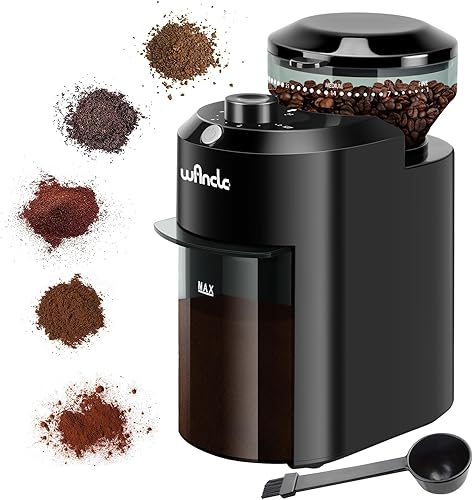
Wancle Burr Coffee Grinder Electric
Best electric burr for pour over - 6
 Check it
CEVING Mini Manual Coffee Grinder
Best for travel and camping - 7
 Check it
JavaPresse Manual Stainless Steel Coffee Grinder
Best simple hand grinder - 8
 Check it
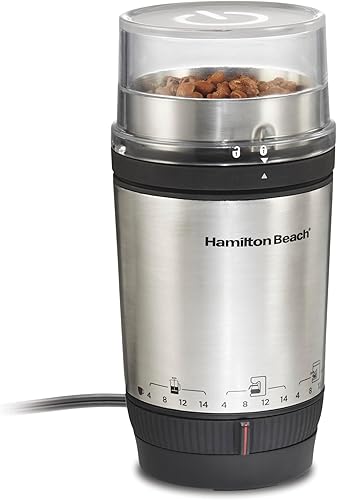
Hamilton Beach Custom Grind Electric Coffee Grinder
Best for hands-free grinding - 9
 Best for large pour-over batchesCheck it
What makes a budget grinder good for pour over
A steady, repeatable medium grind matters more than a big motor or a fancy body. Pour-over brewing pours water slowly over a bed of coffee, so the grinds need to sit in a fairly even layer.
If half the bed is powder and half is chips, the water runs through the fine parts fast and stalls on the rest. The result is a cup that's both bitter and weak.
Control matters as much as the burr type. On a blade grinder, you control the grind with how long you press the button.
On a burr grinder, you control it with a setting dial. Both work if you learn one or two settings you can repeat.
The bed also needs depth, not just width. Too little coffee in the cone lets the water race down the sides.
That is why a small 25 g or 30 g hopper can still brew a good single cup if you dose the full hopper. Match dose to the cone, then set the grind.
Freshness is the other half of the job. Grinding right before you brew keeps more of the aroma in the cup, which is the main reason a budget grinder earns its place on the counter.
Blade vs burr grinders at this price
A blade grinder chops. A burr grinder crushes beans between two surfaces.
At the budget end, both kinds show up, and each has a clear trade-off.
Blade grinders cost less and grind faster. They start around the price of a few bags of coffee and finish a batch in seconds.
The trade-off is evenness. Blade grinding creates a mix of fine and coarse particles, which pour-over brewers notice.
You can improve results by pulsing the button in short bursts and shaking the grinder as you go.
The blade's weak spot is fines. Each burst throws some grounds against the wall where they sit and over-grind into dust.
Shaking the bowl between pulses lifts those grounds back into the path of the blade, which spreads the grind more evenly across the batch.
Burr grinders cost more but give a more even grind. The Wancle Burr is the compact electric burr here, and it adds 28 settings plus a cup dial, while the Cuisinart Supreme Grind is the other electric burr pick for larger batches.
A hand burr grinder such as the NewlukPro M6 gets you burr evenness for less money in return for cranking by hand.
Burr types differ too. Conical burrs, as on the NewlukPro and both hand grinders, feed beans down a cone and crush them slowly.
Flat burrs, as on the Wancle Burr and Cuisinart, press beans between two discs. Flat burrs are the common choice for pourover in cafes, while conical burrs are easier to turn by hand.
How much capacity do you need
Count cups before you buy. A 25 g hand grinder suits a single cup.
A 3 oz or 85 g hopper like the KRUPS grinds enough for about 12 cups.
If you brew for one person each morning, small capacity is fine and keeps the grinder compact. If you brew a carafe for the household or for guests, capacity and speed matter more, and the larger picks here save refills.
Electric grinders also come with limits that affect your routine. The Wancle Burr stops by itself when the cup count is reached, so you can walk away for a moment.
Blade grinders usually need you to hold or watch them. Pick the type that matches how much attention you want to give the task before your first coffee.
Capacity also sets how much you can grind for the fridge. A burr machine with a big hopper lets you grind a week of beans at once and store them sealed.
A small hand grinder is built around the opposite habit: grind just enough for the cup you are about to brew.
Our guide to the best electric coffee grinder covers larger machines for households that brew several styles. If cold brew or a moka pot is on your list, the grind changes, and our coffee grinder for cold brew and coffee grinder for moka pot picks explain the differences.
| Product | Best for | Capacity | Power | Grind style | Our score |
|---|---|---|---|---|---|
| KRUPS Precision Electric Coffee Grinders | most pour-over brewers | 3 oz | 200W | Blade | 9.7 |
| Hamilton Beach Fresh Grind Electric Coffee Grinder | easy cleanup | 4.5 oz | Blade | 9.6 | |
| Wancle Electric Coffee Grinder | small single-cup batches | 60 g | 150W | Blade | 9.3 |
| NewlukPro M6 Manual Coffee Grinder for Espresso | hand grinder for pour over | 25 g | Manual | 9.1 | |
| Wancle Burr Coffee Grinder Electric | electric burr for pour over | Up to 12 cups | 200W | Flat burr | 8.6 |
| CEVING Mini Manual Coffee Grinder | travel and camping | 30 g | Manual | 8.4 | |
| JavaPresse Manual Stainless Steel Coffee Grinder | simple hand grinder | Manual | 8.3 | ||
| Hamilton Beach Custom Grind Electric Coffee Grinder | hands-free grinding | 4 to 14 cups | 150W | Blade | 8.1 |
| Cuisinart Supreme Grind DBM-8 | large pour-over batches | 8 oz hopper | 500W | Flat burr | 7.8 |
Best budget coffee grinders for pour over
The KRUPS takes the top spot for most kitchens, but a burr grinder or a hand grinder can be the better buy for how you brew. Choose by how you want to control the grind and how many cups you make.
The best pick for most pour-over brewers
KRUPS Precision Electric Coffee Grinders: Best for most pour-over brewers
- 200W motor with stainless steel blades
- 3 oz or 85 g bean hopper
- One-touch press and hold control
- Lid-activated safety mechanism
A simple blade grinder with enough capacity for a 12-cup batch. Press and hold to reach a pour-over grind.
Pros
- Grinds up to 12 cups at once
- Lid safety switch
- Compact 4.02 x 3.86 x 8.23 in footprint
Cons
- Blade grinding gives less even particles than a burr
- You judge the grind by sound and time
KRUPS suits the home brewer who makes pour over daily and wants a grinder that sits on the counter without fuss. Its 200W motor and stainless steel blades turn beans from coarse to fine in short bursts, and the 3 oz hopper holds enough for up to 12 cups.
That makes it a match for a household that brews a pot most mornings.
Press and hold the single button and the grind runs. Release and it stops.
For pour over, pulse in short taps and stop while the grounds still look like coarse salt. The lid switch means the blades only spin when the lid sits right, which matters in a busy kitchen.
The 200W motor is the strongest among the blade picks here, so it clears a full hopper without stalling.
The trade-off is evenness. A blade grinder makes a wide mix of particle sizes, so a burr pick edges it for consistency.
It also asks you to judge the grind by sight and sound rather than a dial. Still, if you want one cheap grinder that handles coffee, spices and nuts, this is the easiest buy, and the compact 4.02 x 3.86 x 8.23 in body fits a tight counter.
Best for easy cleanup
Hamilton Beach Fresh Grind Electric Coffee Grinder: Best for easy cleanup
- Removable dishwasher-safe grinding bowl
- Stainless steel blades
- Grinds up to 12 cups
- Hidden cord storage
The bowl lifts out for filling, pouring and dishwasher cleaning. A good fit if messy counter cleanup puts you off grinding.
Pros
- Dishwasher-safe removable bowl
- Hidden cord storage
- 4.5 oz capacity
Cons
- Blade grind, not burr
- No cup or grind setting dial
Hamilton Beach Fresh Grind suits the brewer who hates wiping out a grinder. The grinding bowl lifts out, so you can fill it, pour grounds into the dripper and rinse the bowl in the sink.
The bowl and lid are dishwasher safe, which keeps the daily job short.
Hidden cord storage under the base keeps the lead tidy, and the 4.5 oz bowl grinds enough for up to 12 cups. That is a bigger blade capacity than most picks here, so a full carafe fits in one run.
The 3.74 x 3.54 x 7.13 in body is small for a 4.5 oz bowl, so it still fits a tight counter.
Use the pulse method here too: press, check, press again. Release the button to stop, so you set the grind by eye and time rather than a dial.
Because the bowl comes out, you can tip the grounds straight into the cone and give the bowl a shake to release the last of them.
Against the KRUPS, this pick gives you easier cleanup and more capacity for a small price in cash. It stays a blade grinder, so hand grinder and burr picks still win on evenness.
Hamilton Beach also says it runs quieter than leading competitors.
Best for small single-cup batches
Wancle Electric Coffee Grinder: Best for small single-cup batches
- 150W copper motor
- About 60 g bean capacity
- Transparent lid
- Includes cleaning brush
A compact blade grinder that suits one or two pour-over cups. The clear lid lets you watch the grind progress.
Pros
- Clear lid shows the grind
- Small 3.5 x 3.5 x 6.6 in body
- Cleaning brush included
Cons
- 150W motor is less powerful than the KRUPS
- You must stop it by hand
Wancle's blade grinder suits people who brew one or two cups and like to watch the grind. The clear lid lets you see the particles change from chunks to a mid-coarse powder, so you can stop at the pour-over stage.
That visual cue is the closest a blade grinder gets to a grind setting.
The 150W copper motor is smaller than the KRUPS motor, which is fine for small batches. Pour in beans, press the button and release to stop.
A cleaning brush comes in the box. Its 3.5 x 3.5 x 6.6 in body takes up little space, so it fits a small apartment counter or a crowded shelf.
Wancle says the steel blade and bowl keep the beans from burning during grinding. Bean burn comes from heat building up in the bowl, and short bursts on a small batch limit that.
For one pour-over cup, dose about 15 g to 20 g and pulse in two-second bursts until the grounds look like salt.
The trade-off is capacity and power. The stated capacity is 20 g, while the bullet text mentions about 60 g, so treat a small dose as the safe working figure.
A larger batch means two runs, and the weaker motor takes a moment longer.
Best hand grinder for pour over
NewlukPro M6 Manual Coffee Grinder for Espresso: Best hand grinder for pour over
- SUS 420 38mm hexagonal conical burr
- Bottom adjustment dial
- Aluminum alloy body
- Grinds pour over, French press and espresso
A metal hand grinder with a conical burr and steady burr rotation. Good for a quiet, cord-free pour-over setup.
Pros
- All-metal body
- Even conical burr grind
- No electricity needed
Cons
- Hand cranking takes time
- 25 g capacity is small for a full pot
NewlukPro M6 suits the brewer who wants burr evenness without an electric machine. Its 38mm conical burr made from SUS 420 steel crushes beans between two surfaces, and the bottom dial sets the gaps without tools.
Turning the crank takes effort, but the double bearing axis keeps the burr steady, so grounds come out close in size. For pour over, set a medium grind and crank until the 25 g hopper empties.
That suits one large cup or two small ones. The adjustment knob sits at the bottom, so your hand on the crank won't nudge the setting mid-grind.
The aluminum body and folding handle make it easy to pack for travel, and the 2.13 x 2.13 x 6.1 in size stands about as tall as a water bottle. The all-metal build has no plastic parts in the grind path, and NewlukPro packages it in a gift box with a cleaning brush.
Keep the spring, washer and bearing order right when you reassemble it.
Against the CEVING and JavaPresse, the M6 is the more capable burr for pour over, and its steel burr is built for steady use. The trade-off is 25 g capacity and the time spent cranking for a full pot.
Best electric burr for pour over
Wancle Burr Coffee Grinder Electric: Best electric burr for pour over
- Metal flat burrs
- 28 grind settings
- 2 to 12 cup auto-stop
- 200W motor
An electric flat burr grinder that lets you set the cup count and walk away. Suits pour-over drinkers who want even grounds without hand work.
Pros
- 28 settings for fine tuning
- Auto-stop by cup count
- Flat burrs give even grounds
Cons
- Designed smaller than standard burr grinders
- Costs more than the blade picks
Wancle Burr is the pick for anyone who wants even grounds and an electric motor. Metal flat burrs and 28 settings let you choose a pour-over level and repeat it, so the next brew matches the last.
The settings run from fine to coarse across those 28 steps, which gives you room to adjust in small moves.
Set the cup dial from 2 to 12, then press once. The grinder stops on its own at the end of the cycle, so you can start the kettle while it runs.
The 200W motor matches the KRUPS on paper and drives flat burrs rather than blades. Wancle's guide puts the dose at 7 g to 10 g of beans per cup, which is a useful number when you set the dial.
The anti-static coating on the grounds container cuts cling when you pour. The hopper, grounds bin and burr all come out for cleaning, and a brush is included.
Wancle notes the machine won't start unless the parts are locked in place, so check the assembly before the first use. The unit runs on 120 VAC, and its 6.3 x 3.7 x 7.4 in body stores on a shelf.
The trade-offs are price and size. This costs more than the blade picks, and Wancle says it's built smaller than standard flat burr grinders, with a smaller bean load to match.
Our Baratza Virtuoso review shows what a step up looks like.
Best for travel and camping
CEVING Mini Manual Coffee Grinder: Best for travel and camping
- 40 external grind settings
- Ceramic conical burr
- 30 g capacity
- Weighs 325 g
A small hand grinder with an external adjustment ring. It packs into a bag for pour-over coffee away from home.
Pros
- 40 settings on an outside ring
- Light at 325 g
- Ceramic burr runs cooler
Cons
- 30 g capacity is small
- Ceramic burrs are more brittle than steel
CEVING suits the person who takes pour-over gear on the road. Its 40 external settings sit on a ring outside the body, so you can change the grind without opening the hopper and spilling grounds.
The ceramic conical burr runs cooler than steel during long cranking and holds a consistent size. At 325 g and 6.7 x 2.3 x 7.4 in, it fits a bag or a car cup holder, and the 30 g hopper covers one large cup.
That capacity beats the NewlukPro and JavaPresse, so a two-cup brew fits in one fill.
Take it camping, to an RV or to the office. Set the ring before you start and the grind won't shift as you crank.
Cleaning takes a dry brush rather than water, since moisture in the burr can spoil the next batch.
The trade-off is capacity and burr life. Ceramic runs cooler but is more brittle than steel, so a dropped grinder is the risk.
The 40 settings also overlap more than the 24 on the NewlukPro M6 and the 18 on the JavaPresse, so fine tuning near espresso asks patience.
Best simple hand grinder
JavaPresse Manual Stainless Steel Coffee Grinder: Best simple hand grinder
- Ceramic conical burr
- 18 grind settings
- Manual crank
- Stainless steel frame
A basic hand grinder with a ceramic burr and 18 settings. It gets the job done for one cup at a time.
Pros
- No batteries or cords
- Quiet to use
- 18 settings
Cons
- Fewer settings than the CEVING
- Hand cranking for a full batch is slow
JavaPresse suits the beginner who wants a basic burr grinder and nothing more. Its ceramic conical burr has 18 settings, and the hand crank means no cords and near-silent grinding.
The stainless steel frame and slim body are easy to store, and the manual crank gives you full control over the grind. At 1.8 x 1.8 x 7.5 in and 9.4 oz, it slips into a drawer or a bag.
For pour over, set a medium level and turn steadily, then tap the grinder to release the last grounds.
JavaPresse says the ceramic burr is tested through three quality inspections and lasts longer than comparable stainless steel burrs. The brand also offers a six-month warranty on manufacturer defects and a 30-day return window.
The trade-off is fewer settings and slower work than the other hand grinders. Turning 25 g of beans takes several minutes, and the 18 steps give coarser control than the M6 or CEVING.
It's the cheapest way into burr grinding here, so it fits someone testing whether pour over is for them before spending more.
Best for hands-free grinding
Hamilton Beach Custom Grind Electric Coffee Grinder: Best for hands-free grinding
- Hands-free push-down operation with auto shutoff
- Adjustable grind size ring
- Grinds 4 to 14 cups
- Removable dishwasher-safe bowl
A blade grinder with a grind size ring and hands-free auto shutoff. It suits pour-over drinkers who fill a pot each morning.
Pros
- Auto shutoff
- Dishwasher-safe bowl
- Grinds up to 14 cups
Cons
- Blade grind, not burr
- Timer settings are less precise than burr clicks
Hamilton Beach Custom Grind suits the brewer who fills a pot every morning. Its push-down operation starts the grinder and shuts it off on its own, so you can prep the filter while it runs.
An adjustable ring sets the grind size and the cup count from 4 to 14. The stainless steel bowl comes out for pouring into the dripper and is dishwasher safe.
Its 150W motor and steel blades handle coffee, herbs and seeds, and the 4 x 4 x 8 in body leaves counter room.
For pour over, choose the middle of the ring and run a shorter cycle to avoid powder. Press and hold if you want manual control over the texture instead of the timer.
The auto shutoff is the real draw here, since it takes your hand off the machine and lets the grind finish on its own.
The trade-off is evenness. As a blade grinder it gives a wider particle spread than a burr, and the ring settings are coarser than burr clicks.
The 150W motor is also smaller than the KRUPS, so a full 14-cup load takes longer.
Best for large pour-over batches
Cuisinart Supreme Grind DBM-8: Best for large pour-over batches
- Stainless steel flat burrs
- 18 grind settings
- 4 to 18 cup selector
- 8 oz bean hopper
A flat burr grinder with a broad cup range. It handles a full carafe but takes up more counter room.
Pros
- 18 grind levels
- Grind chamber holds up to 32 cups
- Heavy-duty 500W motor
Cons
- Larger footprint than the other picks
- Costs more than the blade grinders
Cuisinart Supreme Grind suits households that brew a full carafe and want a burr at a lower tier. Its stainless steel flat burrs crack beans between surfaces for a more even particle size.
The 18-position selector runs from fine to extra coarse, so a pour-over setting is easy to find and repeat. Set the slide dial from 4 to 18 cups and the grinder stops when the run is done.
The 8 oz hopper holds a week of beans, and the grind chamber holds enough for up to 32 cups.
The 500W motor is the most powerful here, which shows in how it handles a full hopper without slowing. A cleaning brush, scoop and cord storage come in the box, and the brushed steel housing looks the part on a counter.
A safety interlock stops the motor unless the parts are assembled.
The trade-off is size and cost. At 7 x 8.75 x 12.25 in and 4.5 lb, it takes real counter room, and it costs more than the blade grinders here.
Buy it if pour over is one of several methods you brew and you want one grinder to cover them all.
How we picked these budget pour-over grinders
We picked these grinders by matching their specs to what pour over needs: a medium grind you can repeat, enough capacity for your usual batch and a size that fits a home counter. The score weighs specs, features and fit with the buyer's routine.
Blade and burr types both earn a place. A blade grinder costs less and grinds fast.
A burr grinder gives a more even grind and a setting you can dial back to. We gave each type a slot so you can choose by budget.
Capacity set the range from small to large. Single-cup hand grinders, 12-cup blade grinders and a 14-cup model all appear, so the list covers solo brewers, couples and guests.
We checked build and safety details too, such as lid switches, removable bowls and settings that lock. Those small features decide how often you enjoy using a grinder before coffee.
What we left out
We skipped models whose grind path needs a setting you cannot repeat. That rules out most kitchen gadgets sold as spice mills, which have no dial and no cup guide.
We also passed on machines sized for a cafe counter. Pour-over at home runs on a small batch, and a grinder that fills half the counter earns a place only if you brew for a crowd.
Warranty length was a tiebreaker, not a filter. A one-year term is common at this price, and the Cuisinart's 18-month cover stands out, but we did not drop a grinder for a shorter term alone.
Budget grinder care and pour-over dialing
Rinse and brush after each use to keep oils from going stale in the grinding bowl. A dry brush works better than water for burrs, and a few seconds of brushing keeps the next batch tasting clean.
Learn one pour-over setting and write it down. Start medium and change one step at a time, so each brew tells you something.
If the brew drains slowly, go coarser. If it drains fast, go finer.
Store whole beans in a sealed container away from heat and light. A grinder only earns its keep when the beans going in are fresh.
If you upgrade later, keep the budget one for spices. A dedicated grinder for spices keeps coffee flavors clean, as long as the old machine is cleaned or retired first.
Verdict
The KRUPS Precision Electric is the best budget coffee grinder for pour over for most people, because it grinds a medium batch in seconds and costs little. Whether you make one cup or a carafe, it starts the routine without a big outlay.
Choose the Wancle Burr if even grounds and 28 settings matter more than the price. Pick the NewlukPro M6 for burr quality without electricity, and the CEVING if you grind away from home.
The Hamilton Beach Fresh Grind is the pick for easy cleanup, and the Cuisinart DBM-8 suits large batches. Start with a medium setting, adjust one step at a time and taste each cup.
Our top 3 picks at a glance
-
1
Best for most pour-over brewers
KRUPS Precision Electric Coffee Grinders
9.7/10 our score
See it on Amazon -
2
Best for easy cleanup
Hamilton Beach Fresh Grind Electric Coffee Grinder
9.6/10 our score
See it on Amazon -
3
Frequently asked questions
What grind does pour over need?
Pour over usually calls for a medium grind, about the texture of sea salt. It should sit between a fine espresso grind and a coarse French press grind, so fine enough to slow the water but coarse enough not to clog the filter.
Can a cheap blade grinder work for pour over?
Yes, a blade grinder works for pour over and costs less than a burr grinder. The catch is less even grounds, which can make the brew taste mixed.
Pulse the button and stop early rather than grinding to a fine powder.
Should I grind finer or coarser for my pour over?
If the brew drains slowly or tastes bitter, go coarser. If it drains fast or tastes sour and thin, go a step finer.
Change one click at a time and note the result.


