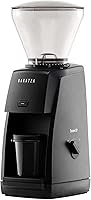
9 Best Conical Burr Coffee Grinders for Espresso (November 2026)
The best conical burr coffee grinders for espresso include the Ollygrin Burr Coffee Grinder for espresso on a budget, the OXO Brew Conical Burr Grinder for repeatable daily shots, and the HAUSCAFE Coffee Grinder for small kitchens.
On this page (4 sections)
The best conical burr coffee grinder for espresso is the Ollygrin Burr Coffee Grinder, with 40 mm stainless burrs and 30 settings that reach a true espresso fineness without costing more than most home setups. Pick the Fellow Opus 2 when you want stepless control for dialing in, the OXO Brew Compact for a tiny counter, or the SHARDOR CG018B when you want to grind straight into a portafilter.
Conical burrs are the practical choice for a first espresso grinder. They crush beans slowly between a cone and a ring, so the grounds stay cooler and more even than a blade grinder can manage.
For espresso, evenness matters more than speed, because a fine grind with a mix of particle sizes pulls unevenly.
The grinders below all reach espresso fineness and go coarser for drip, pour over and French press. We ranked them by how well their burrs, settings and dosing features fit a home espresso routine.
If you also brew filter coffee, our comparison of an espresso grinder vs coffee grinder explains what changes when you ask one machine to do both.
Our picks at a glance
-
1

-
2

-
3

- 4
 Best for stepless espresso dialingCheck it
- 5
 Best for tight countersCheck it
- 6
 Check it
SHARDOR Conical Burr Espresso Grinder
Best for grinding into a portafilter - 7
 Check it
Aromaster 48-Setting Conical Grinder
Best for big households - 8
 Check it
SHARDOR Conical Burr Coffee Bean Grinder
Best for touchscreen control - 9
 Check it
Tuni G1 Conical Burr Coffee Grinder
Best for 54-58 mm portafilters
How we picked the best espresso grinders
We compared burr size and type, settings range, dosing controls and cleaning access, then matched each model to the espresso routine it suits. A grinder that can't reach a fine, even grind won't make good espresso no matter how much it costs.
Burr size sets the pace. A 40 mm conical burr set, like the one in the Ollygrin and both OXO models, grinds slowly enough to keep friction heat down.
The Fellow Opus 2 steps up to 48 mm burrs for faster, cooler work.
Settings decide how much control you get. A stepped dial with many fine positions, or a stepless collar, lets you chase small changes.
A short settings range makes the fine end harder to land on. That is why we counted micro-adjustments separately from main settings: the OXO Brew's 15 main settings sound few until you add its 43 micro-steps, and the Compact's 15 plus 29 work the same way.
Dosing features matter as much as the burrs. A portafilter cradle, a timer or a remembered grind time all reduce the guesswork between shots.
Cleaning access counts too, since espresso-fine grounds pack into a chute quickly. We also weighed safety and upkeep details, such as the Ollygrin's friction clutch and overheating protection, which guard the gears and motor over long use.
Our score weighs specs, features and how well each grinder fits what espresso searchers want. That is why the Ollygrin's affordable fine-grind package sits on top and the portafilter-focused models land lower for a home setup just starting out.
What conical burrs do for espresso
Conical burrs crush beans between a spinning cone and a fixed ring. The slow action generates less heat than flat burrs turning at high speed, and espresso fans value the cooler grounds.
Our guide to the best flat burr grinder covers the other burr shape and when it wins.
Heat is the reason burr speed matters so much at espresso fineness. The finer you grind, the more friction the burrs create, and the Ollygrin answers this with a gear reduction motor that turns the burrs slowly on purpose.
The Tuni G1 makes the same trade, spinning its 40 mm burrs at 450 RPM to hold a stable temperature. Cooler grounds keep their oils, and those oils are what carry aroma into the cup.
Settings, dosing and workflow
Espresso lives at the fine end of the dial, and small changes shift shot time. A stepless collar or micro-adjustments help, and so do timers and portafilter cradles.
A compact burr coffee grinder is the right call when counter space is short but you still want fine settings.
Timers differ more than the settings dials suggest. The SHARDOR CG018B adjusts grind time in 0.1 second steps up to 60 seconds, which is the finest control here, while its sibling CG203S works in 1 second steps and the Tuni G1 in 0.5 second steps.
The Ollygrin skips a timer and doses by cup count instead, from 2 to 12 cups, which suits anyone who grinds a batch rather than a single basket.
Best conical burr coffee grinders for espresso
The Ollygrin is the best overall for most home espresso setups. Each pick below solves a different problem, from stepless dialing to small kitchens and direct portafilter dosing.
Ollygrin Burr Coffee Grinder: Best for espresso on a budget
- 40 mm stainless steel conical burrs
- 30 grind settings from espresso to French press
- Gear reduction motor for slow grinding
- 10 oz hopper with auto-locking lid
A 40 mm conical burr set with 30 settings covers espresso and every brew method above it. The slow gear reduction motor keeps friction heat down.
Pros
- Reaches espresso fineness
- Slow motor keeps grounds cooler
- Friction clutch and overheating protection
Cons
- Stepped settings limit micro-adjustment
- Stepped dosing in 2-12 cup amounts
Ollygrin is the grinder we would put on most home counters first. Its 40 mm stainless steel conical burrs are the same size class as the OXO models, and the 30 settings run from ultra-fine for espresso to coarse for French press.
The gear reduction motor turns the burrs slowly, which keeps friction heat away from the beans and protects the flavor. That slow, steady action is what makes a fine espresso grind usable rather than scorched.
A 10 oz hopper holds enough beans for several servings. The auto-locking system keeps the hopper sealed so beans don't spill when you lift it off to store or swap beans.
A rotary two-in-one button handles start and stop, and the 2 to 12 cup settings let you grind a single serving or a full pot.
Double safety protection matters in daily use: the friction clutch stops the gear if a small stone ends up in your beans, and overheating protection guards the motor on long sessions. The upper burr lifts off and a brush is included for cleaning.
The trade-off is that 30 settings are stepped. For espresso you'll land on a fine position and stay there, but a stepless grinder gives you smaller nudges when a shot runs long or short.
That is the only real gap against the Fellow Opus 2.
OXO Brew Conical Burr Grinder: Best for repeatable daily shots
- 40 mm stainless steel conical burrs
- 15 settings plus 43 micro-adjustments
- One-touch start remembers last setting
- 12 oz UV-blocking hopper
The one-touch timer remembers your last dose, so the morning shot starts the same way every time. Micro-adjustments give finer control than the settings dial alone.
Pros
- Micro-adjustments refine espresso dialing
- Remembers last grind time
- UV-blocking hopper
Cons
- Fewer main settings than the Ollygrin
- No portafilter cradle
The OXO Brew Conical Burr is the grinder for anyone who pulls the same shot every morning. Its one-touch start remembers your last setting, so you press once and get the same dose without resetting the timer.
Its 40 mm stainless burrs sit in the same class as the Ollygrin's. The difference is control: 15 main settings plus 43 micro-adjustments let you move in smaller steps than a 30-position dial allows, which is what dialing in espresso asks for.
The 12 oz hopper is the largest in this group and carries a UV-blocking tint. That matters if your grinder sits near a sunny kitchen window, because light degrades coffee oils over time.
Its timer dial sets the grind time rather than the dose. You'll find the seconds that fill your basket and keep them, which suits a routine espresso setup better than a single-dose workflow.
The trade-off against the Ollygrin is cost and simplicity. The OXO gives you finer control and a bigger hopper but no portafilter cradle, so you'll grind into the container and transfer.
For most people chasing a repeatable daily shot, that is an easy trade.
HAUSCAFE Coffee Grinder: Best for small kitchens
- 38 grind settings from espresso to French press
- Conical burr set that reduces heat buildup
- One-touch operation
- Compact footprint
38 settings and a compact body suit renters and small counters. The removable hopper and grounds container make cleaning simple.
Pros
- 38 settings cover espresso and beyond
- Compact footprint
- Removable hopper and grounds container
Cons
- No portafilter cradle
- One-touch control only, no timer dial
HAUSCAFE is the pick when the espresso machine already owns your counter. Its compact body fits beside a machine where a full-size grinder would crowd it out.
The 38 settings cover espresso at the fine end through pour over, drip and French press. That is a wide enough range to switch between your espresso machine and a weekend pour over without changing grinders.
Conical burrs keep heat buildup low and produce a more even grind than a blade grinder, which matters at espresso fineness. The one-touch control keeps the routine short: load the hopper, press, and the grounds land in the container.
Cleaning is simple because the hopper, grounds container and included brush all come off or reach the burr area without tools. That helps when espresso grounds start to clump in the chute.
The trade-off is dosing. There is no timer dial and no portafilter cradle, so you'll measure your basket by feel or with a scale.
For a small kitchen and a single espresso machine, the compact size and 38 settings outweigh that gap.
Fellow Opus 2: Best for stepless espresso dialing
- 48 mm conical burrs
- Stepless grind adjustment
- Two magnetic catch cups including a 54/58 mm portafilter cup
- Anti-static technology and auto stop
Stepless adjustment lets you nudge the grind in tiny steps, which is what espresso dialing asks for. The portafilter catch cup and auto stop simplify the workflow.
Pros
- Stepless adjustment for espresso
- Portafilter catch cup included
- Auto stop and anti-static
Cons
- Premium price tier
- Fewer preset reference points than a stepped dial
The Fellow Opus 2 is the pick for anyone who treats espresso dialing as part of the hobby. Its stepless adjustment moves continuously, so you can make tiny changes that a stepped dial can't offer.
The 48 mm conical burrs are the largest here. Larger burrs grind faster and with less heat, which helps keep the grounds cool as they fall into the basket.
Fellow says the design leaves almost no grounds behind, so a 22 gram dose comes out as 22 grams.
Two magnetic catch cups snap into place. One suits coarser grinds and the other is shaped for 54 mm and 58 mm portafilters, so you can grind straight into the basket for espresso.
Anti-static technology keeps grounds from clinging and scattering.
Automatic shutoff means you press and walk away. A grind guide under the lid gives a starting point for espresso and other methods, and tool-free burr access makes cleaning and calibration simple.
A two-year warranty backs the build.
The trade-off is the premium price tier and fewer preset reference points than a stepped dial gives a beginner. The stepless collar rewards someone who will taste and adjust, and the included portafilter cup means no transfer step.
OXO Brew Compact Conical Burr: Best for tight counters
- 15 settings plus 29 micro-adjustments
- Stainless steel conical burrs
- 50 g hopper for up to 6 cups
- 11 in tall and 4 in wide
The compact cabinet fits where a full-size grinder won't, and the burrs still reach espresso fineness. The small hopper suits one or two shots a day.
Pros
- Very small counter footprint
- Micro-adjustments for espresso
- Burrs come apart for cleaning
Cons
- 50 g hopper is small for a household
- No portafilter cradle
The OXO Brew Compact is the grinder for a counter where every inch counts. At 11 in tall and 4 in wide, it fits into gaps a full-size grinder can't reach.
Don't let the size mislead you on grind quality. It uses stainless steel conical burrs with 15 settings and 29 micro-adjustments, so it reaches espresso fineness and lets you refine the grind in small steps.
The 50 g hopper holds enough for up to 6 cups or 30 oz of brewed coffee. For a household pulling one or two espresso shots a day, that is plenty and keeps the beans fresher.
The chuteless design makes the grinder body easy to reach. The upper and lower burrs come apart for cleaning, and the cord wraps for storage.
The grinds container has an integrated spout for neat pouring.
The trade-off is capacity. A 50 g hopper runs dry fast in a busy kitchen, so you'll refill more often than with the 10 to 12 oz hoppers above.
For a small space and light use, the compact cabinet is the reason to pick it.
SHARDOR Conical Burr Espresso Grinder: Best for grinding into a portafilter
- 40 mm stainless steel conical burrs
- 51 grind settings
- Precision timer in 0.1 second steps up to 60 seconds
- Portafilter cradle and dosing ring
A portafilter cradle holds the basket under the chute so grounds land straight in. The 0.1 second timer helps repeat the same dose.
Pros
- Grinds directly into a portafilter
- Fine timer steps
- 51 settings
Cons
- No included tamper
- Cradle only fits some portafilters
The SHARDOR CG018B is the pick for a single-dose espresso routine. Its portafilter cradle holds the basket under the chute, so grounds land straight in and you skip the transfer step.
The 40 mm stainless steel conical burrs keep heat low and produce even grounds. The 51 settings run from espresso to French press, giving you plenty of room to land on the fine end.
The precision timer is the useful part for espresso: it adjusts in 0.1 second steps up to 60 seconds. Once you find the seconds that fill your basket, you can repeat that dose closely each time.
The touchscreen also selects 1 to 12 cups.
The portafilter cradle clicks into place and activates espresso mode. If your basket doesn't fit the cradle, a dosing ring catches the grounds instead.
Anti-static technology keeps the chamber cleaner and a residual grounds cleaner is included.
The trade-off is fewer refinements than the top picks and no tamper in the box.
For a home barista who wants to grind into the basket without a mess, the cradle and fine timer make it worth a look.
Aromaster 48-Setting Conical Grinder: Best for big households
- 48 grind settings
- Timer for dose control
- Large 3.9 oz chamber
- Anti-static bin with UV-reducing tint
The larger chamber suits families and offices that grind several pots a day. 48 settings reach espresso fineness at the fine end.
Pros
- Large 3.9 oz capacity
- 48 settings
- Anti-static bin
Cons
- Bulky cabinet
- Tall body needs clearance above
Aromaster suits a big household or a small office where several people pull shots through the day. Its 3.9 oz chamber grinds enough for multiple servings before you refill.
The 48 settings reach espresso fineness and go coarse for French press. A timer lets you adjust the amount of grounds for the dose you want.
The anti-static bin cuts down on grounds flying around the workspace. A tawny tint on the bin reduces the impact of ultraviolet light on the beans, similar to the UV-blocking idea in the OXO.
The stainless steel burrs grind slowly to limit heat and keep the original flavor. A built-in brush helps prevent blockages, and the removable ring burr makes cleaning easier.
Keep the conical burr dry before reassembling.
The trade-off is size. The cabinet is bulky and tall at 16 in, so it needs clearance above and room beside the machine.
It also wants a 120V outlet. For a family or office that grinds often, the capacity and settings earn the space.
SHARDOR Conical Burr Coffee Bean Grinder: Best for touchscreen control
- 48 grind settings
- LCD touchscreen with precision timer up to 40 seconds
- Anti-static chamber
- 9.7 oz locking hopper
The touchscreen makes dose changes quick, and the locking hopper stays put when you move the grinder. 48 settings cover espresso to French press.
Pros
- Touchscreen with timer
- Large locking hopper
- Anti-static chamber
Cons
- No portafilter cradle
- Higher price tier than the Ollygrin
SHARDOR's CG203S is the pick when you want to change dose with a tap. Its LCD touchscreen sets the grind time in 1 second steps up to 40 seconds, so adjusting for a new basket takes a few presses.
The 48 settings cover espresso through French press. The conical burr set runs at low speed to keep heat down and help release the oils for flavor.
The 9.7 oz hopper uses a locking system that keeps it secure in place. That matters if you move the grinder between the counter and a cabinet, or swap beans between espresso and filter.
The anti-static chamber stops grounds from sticking and building a mess. That makes cleanup quicker between shots and keeps the chute clear at espresso fineness.
The trade-off against the Ollygrin is the price tier and dosing shape. There is no portafilter cradle here, so you grind into the container and transfer.
For someone who likes touchscreen control and a large hopper, it is a solid step up in convenience.
Tuni G1 Conical Burr Coffee Grinder: Best for 54-58 mm portafilters
- 48 grind settings
- 40 mm conical burrs at 450 RPM
- Detachable portafilter holder for 54-58 mm baskets
- 250 g hopper and 75 g grounds container
The detachable portafilter holder lines up with 54 mm to 58 mm baskets so you can grind straight into the basket. The anti-fingerprint finish keeps it looking clean.
Pros
- Detachable portafilter holder
- Large 250 g hopper
- 450 RPM low-speed grinding
Cons
- Coarser timer steps than the SHARDOR cradle pick
- Dosing cup needed for larger batches
Tuni G1 is the pick when your portafilter basket is 54 mm to 58 mm and you want to grind straight into it. The detachable holder lines up the basket under the chute, so grounds land where they are going.
The 40 mm conical burrs turn at 450 RPM. Tuni says the low speed minimizes static and heat, which helps keep the grounds cool and consistent at espresso fineness.
The 48 settings reach from espresso to French press. The grind time adjusts in 0.5 second steps up to 40 seconds, and the cup size can be set from 2 to 12 cups.
Capacity is generous: a 250 g/8.8 oz hopper plus a 75 g/2.6 oz grounds container. The anti-fingerprint stainless finish resists smudges, and a soft brush sits on the hopper lid for cleaning.
The trade-off is the dosing control against the SHARDOR cradle pick. The SHARDOR's 0.1 second timer offers finer dose control.
Pick Tuni when the 54 mm to 58 mm fit, the larger hopper and the dosing cup for batch grinding matter more.
Choosing between these espresso grinders
The right grinder comes down to three things: how precise you want your espresso dialing, how much counter space you have, and whether you want to grind into a portafilter. Every model here reaches espresso fineness, so the decision is about workflow, not basic capability.
Stepped vs stepless settings for espresso
Stepped grinders move between fixed positions. A 30 or 48 position dial gets you close to the espresso sweet spot and stays there, which suits a routine shot.
Stepless grinders move continuously, so you can make changes too small for a dial to show. Pick stepless if you change beans often or want to chase small timing changes.
Pick stepped if you want a repeatable setting you won't adjust much.
A middle path exists in the micro-adjustment dials. The OXO Brew's 43 micro-steps and the Compact's 29 split the difference, giving you a remembered main setting plus small refinements around it.
That suits someone who wants to tune once a week rather than every shot.
Dosing into a basket or a container
Grinding straight into the portafilter skips a step and reduces spills. The SHARDOR CG018B and Tuni G1 both offer a portafilter holder, while the Fellow Opus 2 includes a 54 mm and 58 mm catch cup.
The other grinders here grind into a container, which suits people who weigh doses on a scale anyway. If you want the tightest dose control, the SHARDOR timer in 0.1 second steps is the finest here.
Space, capacity and cleaning
Counter space decides more than you might expect. The OXO Brew Compact is the smallest here at 11 in tall and 4 in wide, while the Aromaster and Tuni are the bulkiest.
Hopper size runs from the Compact's 50 g to the Tuni's 250 g. Cleaning access varies too: the Ollygrin and OXO Compact lift their upper burrs, and most models include a brush.
The SHARDOR CG203S even shows an overheat code and asks you to let it cool for 10 minutes, a reminder that espresso-fine grinding works the motor hard. If you brew once a day, a small hopper keeps beans fresher.
If your budget is firm, our roundup of the best espresso grinders under 200 narrows the field further. And if you also want a grinder that serves drip and pour over well, the compact options above double up.
Which conical burr espresso grinder should you buy?
Most people should buy the Ollygrin Burr Coffee Grinder. It reaches espresso fineness with 40 mm burrs and a slow motor, covers every coarser brew method, and keeps the price in reach.
The stepless Fellow Opus 2 is the upgrade for dedicated espresso dialing.
If you want to grind straight into a portafilter, the SHARDOR CG018B or Tuni G1 is the better fit. For a tiny counter, the OXO Brew Compact squeezes in without giving up espresso settings.
And if you brew more than espresso, the HAUSCAFE's 38 settings and small body make it the easiest to live with.
Whichever you choose, buy for the workflow you actually use. A grinder you enjoy adjusting gets used more than one that feels fussy before the first shot.
Our top 3 picks at a glance
-
1
-
2
-
3
Frequently asked questions
What makes a conical burr grinder good for espresso?
Espresso needs a fine, even grind, and conical burrs crush beans between a cone and a ring rather than chopping them. The best espresso grinders reach a true fine setting and hold it steady so each shot pulls the same way.
Do I need stepless adjustment for espresso?
Stepless helps but it is not required. Small grind changes shift espresso timing a lot, so stepless grinders like the Fellow Opus 2 let you nudge in tiny steps.
Stepped grinders with micro-adjustments, like the OXO Brew models, get close enough for most home setups.
Can these grinders also handle drip and pour over?
Yes. Every grinder here reaches from espresso fineness up to coarse for French press and cold brew.
A grinder with a wide settings range, such as the Ollygrin with 30 settings or the HAUSCAFE with 38, covers espresso and filter brewing without changing burrs.
How much does burr size matter for espresso?
Bigger burrs grind faster and with less heat, so the grounds reach the basket cooler. The Ollygrin and OXO models use 40 mm burrs, while the Fellow Opus 2 uses 48 mm burrs for a quicker, cooler grind at espresso fineness.
Why grind directly into a portafilter?
Grinding straight into the basket skips a transfer step, so fewer grounds spill and the dose stays even. The SHARDOR CG018B includes a portafilter cradle, and the Tuni G1 holder fits 54 mm to 58 mm baskets.
Is a conical burr grinder enough for a first espresso setup?
Yes. A conical burr grinder with fine settings and a steady motor is the practical first upgrade for a home espresso machine.
Start with an affordable model like the Ollygrin and move to stepless when you want tighter shot control.