Espresso Grinder vs Coffee Grinder: What Changes? (November 2026)
An espresso grinder needs finer, more precise adjustment; a general coffee grinder may suit filter brewing better. The right choice depends on your brewer, how often you change grind size and whether you want to grind into a portafilter.
On this page (7 sections)
- Espresso grinder vs coffee grinder: what changes?
- Which grinder suits espresso and filter brewing?
- How do the three grinders compare?
- What should you check before choosing an espresso grinder?
- What should filter coffee drinkers prioritize?
- How do grind size and burr type affect the choice?
- Which grinder should you choose?
An espresso grinder needs finer, more precise adjustment; a general coffee grinder may suit filter brewing better. The espresso grinder vs coffee grinder choice depends on your brewer, how often you change grind size and whether you want to grind into a portafilter.
“Coffee grinder” is the broader term. An espresso grinder is still a coffee grinder, but it needs to reach a fine grind and let you adjust it in small enough steps for your espresso setup.
Some electric models cover both espresso and filter brewing. The Baratza Encore ESP has separate adjustment ranges for each, while the OXO Brew and Breville Smart Grinder Pro offer their own ranges and controls.
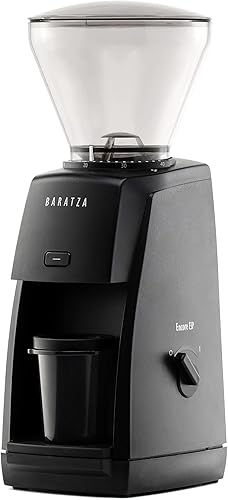

Espresso grinder vs coffee grinder: what changes?
The main difference is how much control you get near the fine end of the grind range. Espresso generally calls for finer grounds than drip or French press, and small adjustments can matter when dialing in a shot.
A general-purpose grinder may offer settings across several brew methods. That flexibility can be useful, but the labels “fine” and “espresso” don't tell you whether the steps suit your machine and coffee.
Look for the adjustment range, how easy it is to repeat a setting and how the grinder handles dosing. For a primer on burr types and grinder choices, see how burr grinders work and what to choose.
Why do espresso settings need smaller adjustments?
Small grind changes can change how quickly water flows through an espresso puck. If a shot runs too quickly or slowly, a finer or coarser setting may help you adjust the flow.
The useful adjustment depends on your espresso machine, basket and coffee. A grinder's number of settings alone won't predict how it performs with your setup.
The Baratza Encore ESP uses micro-steps numbered 1–20 for espresso and macro-steps numbered 21–40 for filter brewing. That split gives you a clear range for each style.
Does a larger number of settings mean a better grinder?
More settings can give you more adjustment choices, but they don't guarantee a better fit. Consider the settings where you brew most, how clearly they're marked and whether you can return to a familiar dose.
The Breville Smart Grinder Pro has 60 settings and adjusts grind time in 0.2-second increments. Its LCD shows the setting, grind time and selected shots or cups.
The OXO Brew has 15 settings plus 43 micro-adjustments. It remembers the last setting for one-touch starting, which may suit a routine built around a few regular recipes.
Which grinder suits espresso and filter brewing?
Choose a grinder with clear, repeatable adjustment if you switch between espresso and filter methods. If you make one style most of the time, prioritize the controls and range that match that routine.
The Baratza Encore ESP is built around two ranges: micro-steps for espresso and macro-steps for filter brewing. Its hopper twists to adjust grind size, and it has a front-mounted pulse button and an on/off switch.
The Breville Smart Grinder Pro has 60 settings and can grind into a portafilter, an airtight container, a gold-tone filter basket or a paper filter. Its shot and cup settings help match dosing to the brew method.
For regular filter coffee, hopper size and simple operation may matter more than espresso-specific features. The OXO Brew holds up to 12 oz of beans and remembers the last setting when you start it.
If you are choosing among electric models, compare the controls and capacity in our electric coffee grinder guide. For a more espresso-focused shortlist, see espresso grinders under 200 dollars.
How do the three grinders compare?
The Baratza separates espresso and filter ranges, the OXO emphasizes hopper capacity and one-touch use, and the Breville offers timed dosing and direct portafilter grinding. Choose according to the parts of your routine you want the grinder to simplify.
| Product | Best for | Adjustment | Burrs | Capacity | Our score |
|---|---|---|---|---|---|
| Baratza Encore ESP | espresso and filter | Micro-steps 1–20; macro-steps 21–40 | 40 mm hardened alloy steel | 120 g | 8.7 |
| OXO Brew Conical Burr Grinder | filter coffee | 15 settings plus 43 micro-adjustments | 40 mm stainless steel conical | 12 oz | 8.9 |
| Breville Smart Grinder Pro | dose control | 60 settings | 18 oz hopper | 9.0 |
The table summarizes features that affect daily use. It does not predict how a grinder will perform with every coffee, espresso machine or brewing recipe.
The Baratza’s 120 g capacity is smaller than the OXO’s 12 oz hopper and the Breville’s 18 oz hopper. If you brew several cups at once, consider whether you prefer storing beans in the hopper or adding smaller amounts as needed.
Dosing also differs. Breville lets you set grind time in 0.2-second increments, while OXO remembers the last setting for one-touch starting.
The Baratza offers a pulse button and on/off switch.
What should you check before choosing an espresso grinder?
Check that the grinder’s fine range and adjustments work with your espresso machine and basket. Then consider whether you want to grind into a portafilter or into a separate container.
Espresso setups vary, so a setting that works for one combination may need adjustment with another. If you change beans often, easy repeatable controls can help you find a useful setting again.
The Breville includes small and large portafilter cradles, sized for 50–54 mm and 58 mm portafilters. The Baratza description mentions an espresso dosing cup for dosing directly into a portafilter.
The OXO’s stated range runs from fine for espresso to coarse for French press and cold brew. Its feature details don't specify portafilter dosing, so consider whether collecting grounds in a container fits your workflow.
What should filter coffee drinkers prioritize?
For filter brewing, prioritize the settings you use, hopper capacity and how quickly you can start a familiar grind. Espresso features may add little value if you rarely make espresso.
The OXO Brew's 12 oz hopper is the largest of these three by stated capacity. Its remembered one-touch setting can save a step when you repeatedly use the same grind.
The Breville includes settings for French press or filter under its cups option, and its 18 oz hopper holds more beans than the other two. Its LCD and timed dosing may appeal if you want more control over the amount ground.
The Baratza's macro-steps 21–40 are intended for filter methods. If you mainly brew pour over, use the guide to choose a grind size for pour over, then look for a grinder whose controls make that setting easy to repeat.
How do grind size and burr type affect the choice?
Grind size and adjustment matter more to this choice than whether a burr is conical or flat. Start with the brew method and the control you need, then compare burr material and grinder features.
All three products here use conical burrs. The Baratza has 40 mm hardened alloy steel burrs, the OXO has 40 mm stainless steel conical burrs, and the Breville is described as a conical burr grinder.
Burr construction is one part of the decision. Your ability to choose and repeat a grind setting also matters, especially when moving between espresso and filter coffee.
If you want to compare burr materials, read our guide to ceramic vs stainless steel burr grinders. It can help you understand that distinction without treating burr material as a shortcut for choosing a brew range.
Which grinder should you choose?
Choose the Baratza Encore ESP for clearly separated espresso and filter ranges, the OXO Brew for a large hopper and simple repeat starts, or the Breville Smart Grinder Pro for more settings and timed portafilter dosing. Let your most common brewing method set the priority.
The Baratza suits a mixed-brew home that wants dedicated adjustment ranges for espresso and filter. The OXO fits a filter-focused routine with a larger hopper and one-touch start.
The Breville fits an espresso routine that values multiple dosing options and direct grinding into a portafilter. If you want to compare espresso-capable hand grinders too, see our guide to the best hand grinders for espresso at home.
For espresso grinder vs coffee grinder, choose by adjustment range and daily workflow: pick the Baratza for distinct espresso and filter ranges, the OXO for regular filter brewing, or the Breville for timed dosing and portafilter options.
Frequently asked questions
Is an espresso grinder different from a coffee grinder?
An espresso grinder is a coffee grinder designed to make fine adjustments for espresso, where small grind changes can affect how quickly water passes through the coffee. General coffee grinders may focus more on a broad range for filter methods.
Some models, such as the Baratza Encore ESP, are designed for both.
Can I use a regular coffee grinder for espresso?
You can use a coffee grinder for espresso if it can grind fine enough and adjust in small steps. A wide range alone doesn't guarantee that the grinder will suit your espresso setup.
Check the adjustment range and whether the grinder supports your preferred way to dose.
Do espresso grinders work for drip coffee?
Many espresso grinders can also grind for drip coffee, but ease of switching settings varies. A grinder with clearly separated espresso and filter ranges can make changes simpler.
If you mainly brew drip coffee, compare its filter settings, capacity and controls with your daily routine.
Does espresso require a special burr grinder?
Espresso doesn't require a grinder labeled only for espresso, but the grinder must support a fine setting and useful adjustment steps. Burr grinders are commonly chosen because they offer set grind sizes.
Match the grinder to your brewer and check that its adjustment range covers the coffee you make.


