8 Best Hand Grinders for Espresso at Home (November 2026)
The best hand grinders for home espresso include the Comandante C40 MK4 for a classic premium hand mill, the 1Zpresso K-Ultra for espresso and other brew methods, and the KINGrinder K6 for external adjustment on a budget.
On this page (4 sections)
The best hand grinder for espresso at home is the 1Zpresso J-Ultra for fine adjustment, with 8-micron steps and a magnetic catch cup. If you also brew filter coffee, the K-Ultra offers a wider range, while the KINGrinder K6 gives you external adjustment at 16 microns per click.
A manual grinder gives you control over each dose without an electric motor on the counter. The tradeoff is turning the handle by hand, so comfort and the amount you grind matter alongside espresso adjustment.
For the espresso-specific differences between burr shapes and grinder ranges, read what changes between an espresso grinder and a coffee grinder. If you are weighing manual against powered grinding, our manual vs electric coffee grinder comparison covers the workflow tradeoffs.
Our picks at a glance
-
1

-
2

-
3

How to choose the best hand grinder for espresso
The best hand grinder for espresso gives you repeatable fine adjustments and a comfortable dose workflow. Compare adjustment step size first, then check capacity, catch cup, handle and cleaning.
Which adjustment range suits espresso?
Smaller adjustment steps make it easier to make fine changes while dialing in espresso. In this group, the J-Ultra moves by 8 microns per click, the C5 ESP Pro by 15 microns, and the K6 by 16 microns.
A grinder can list espresso as a use and still differ in how precisely you can adjust it. The K7 and C40 MK4 have less specific adjustment information here, so they may suit buyers who value other features more.
How much capacity do you need?
Choose capacity around the amount of coffee you grind for a session. The C5 ESP Pro and C3 ESP Pro hold 25 g, while the K-Ultra and J-Ultra catch cups hold 35–40 g of grounds.
A larger cup can help when making more than one drink, but it can add bulk for a single dose. Check the amount you usually grind before choosing by capacity alone.
Which catch cup and handle make cleanup easier?
A magnetic catch cup snaps onto the K-Ultra and J-Ultra, while the K7 adds a locking design. Foldable handles on the 1Zpresso and Timemore models help reduce storage space and prevent tipping when the handle is tucked away.
Cleaning access also varies. The 1Zpresso grinders can be dismantled without tools, and several other picks describe disassembly for brush cleaning.
| Product | Best for | Capacity | Body | Adjustment | Our score |
|---|---|---|---|---|---|
| Comandante C40 MK4 | a classic premium hand mill | Around 40 g per jar | Stainless steel | Not stated | 9.3 |
| 1Zpresso K-Ultra | espresso and other brew methods | 35–40 g of grounds | More than 100 clicks; 20 microns per click | 9.2 | |
| KINGrinder K6 | external adjustment on a budget | 25–35 g hopper volume | 16 microns per click | 9.1 | |
| 1Zpresso J-Ultra | fine espresso dialing | 35–40 g of grounds | 8 microns per click | 9.0 | |
| KINGrinder K7 | a magnetic locking cup | 35 g | Fine micro-adjustments; step size not stated | 8.6 | |
| Timemore C5 ESP Pro | a compact espresso-focused body | 25 g | 15 microns per click | 8.5 | |
| Timemore Chestnut C3 ESP Pro | a clear espresso setting guide | 25 g | 23.3 microns per click | 8.3 | |
| Timemore S3 | external point-to-point adjustment | 30 g | 0.015 mm per grid | 8.0 |
The best hand grinders for espresso
These hand grinders suit different espresso routines, from very fine adjustment to an all-round brew range. The picks below are ordered by their scores, with the top choice balancing espresso control and everyday handling.
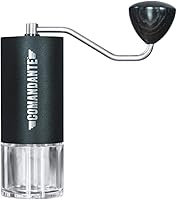
Comandante C40 MK4: Best for a classic premium hand mill
- Two jars hold around 40 g each
- Stainless steel burr
- Removable handle
The C40 MK4 comes with two easy-to-clean jars, each holding around 40 g of beans. Its stainless steel burr and removable handle suit a buyer who values a simple manual setup.
Pros
- Two jars included
- Each jar holds around 40 g
- Removable handle
Cons
- Espresso adjustment detail is not stated
- Less adjustment information than other picks
Comandante C40 MK4 comes with one brown glass jar and one clear polymer-glass jar, each holding around 40 g of beans. Both jars are easy to clean, and the MK4’s redesigned internal tri-fan axle support is intended to make filling simpler.
Its stainless steel burr and removable oak handle knob keep the design straightforward. The available details do not specify an espresso adjustment step size, so consider it if the two jars and classic manual format matter more to you than a clearly stated fine adjustment range.
The C40 is also described for Turkish, AeroPress, pour over, drip and French press brewing. That range makes it a candidate for a household that uses more than one brew method.
Choose it for the two included jars and broad brew use. If espresso dialing is your main concern, compare its adjustment detail with the J-Ultra or C5 ESP Pro before deciding.
1Zpresso K-Ultra: Best for espresso and other brew methods
- More than 100 external adjustment clicks
- 20 microns per click
- Magnetic catch cup
- Foldable handle
The K-Ultra pairs an external dial with more than 100 clicks per rotation and covers espresso through coarse brewing. Its magnetic catch cup and travel case suit a grinder that may leave the kitchen.
Pros
- Fine external adjustment
- Works across espresso and filter methods
- Tool-free cleaning
Cons
- 20-micron steps are wider than the J-Ultra's
- 35–40 g catch cup capacity may exceed a single dose
The 1Zpresso K-Ultra works for espresso and other brew methods, with an external dial offering more than 100 clicks at 20 microns per click. Its adjustment range covers coarse through espresso-fine settings.
The magnetic catch cup holds 35–40 g of grounds, and the handle folds for storage. The grinder can be dismantled without tools, and a travel case, brush and air blower are included.
This is a practical fit if one grinder needs to move between espresso and filter brewing. Its adjustment steps are wider than the J-Ultra’s, but its stated range makes it the more flexible pick for mixed brewing.
Choose it if you want espresso capability alongside pour over, French press or cold brew. For an espresso-first routine that needs smaller changes, the J-Ultra is the more focused option.
KINGrinder K6: Best for external adjustment on a budget
- 16 microns per click
- External adjustment
- 25–35 g hopper volume
- Aluminum body
The K6 offers external adjustment at 16 microns per click, with a stainless steel burr and dual bearings. Its 25–35 g hopper volume works for varied doses.
Pros
- External adjustment
- 16-micron steps
- Can be dismantled by hand for cleaning
Cons
- No catch cup magnet detail
- Capacity range may be larger than one espresso dose
The KINGrinder K6 combines external adjustment at 16 microns per click with a stainless steel burr, aluminum body and dual bearings. Its dial has 60 clicks per rotation and up to 4 full rotations.
The stated hopper volume is 25–35 g, and the grinder can be dismantled by hand for brush cleaning. The adjustment range covers fine to coarse grinding for different brew methods, including espresso.
The K6 suits a buyer who wants external control and a metal body, with a step size between the J-Ultra and K-Ultra. Its catch cup does not have the magnetic feature described for those 1Zpresso models.
Choose it for external adjustment across several brew styles. If espresso is your only method and you want the smallest stated steps, the J-Ultra offers a closer adjustment increment.
For more detail on the K6, see our KINGrinder K6 hand grinder review, or compare it with the Timemore model in KINGrinder K6 vs Timemore C3 ESP Pro.
1Zpresso J-Ultra: Best for fine espresso dialing

- 8 microns per click
- External adjustment
- Magnetic catch cup
- Foldable handle
The J-Ultra is designed for espresso, with 8-micron external adjustment steps and a magnetic catch cup. A foldable handle and travel case make it easier to pack.
Pros
- Small adjustment steps for espresso
- Magnetic catch cup
- Tool-free cleaning
Cons
- Espresso-focused design is less suited to buyers who want one grinder mainly for coarse brews
- Capacity may be more than a single dose
The 1Zpresso J-Ultra is the espresso-focused pick, with 8-micron steps on its external adjustment. Its coated burr is designed for finer espresso grinding, and the magnetic catch cup holds 35–40 g of grounds.
A foldable handle and travel case make it easier to store or carry. Tool-free disassembly supports cleaning without re-calibrating the burr, and the grinder comes with a cleaning brush and air blower.
The smaller adjustment steps give you more room for fine changes than the other picks with stated click sizes. That can help when the difference between two settings matters to your shot, though the grinder still needs to match your espresso machine and dose.
Choose it if espresso dialing is the priority. For a wider range that includes several filter methods, consider the K-Ultra instead.
KINGrinder K7: Best for a magnetic locking cup

- Top adjustment dial
- Magnetic and locking catch cup
- Triple bearing support
- All-metal construction
The K7 has a top adjustment dial and a magnetic catch cup with an added lock. Its triple bearing support and all-metal construction are useful details for frequent manual grinding.
Pros
- Catch cup has both a magnet and lock
- Triple bearing support
- Easy disassembly without tools
Cons
- Adjustment step size is not stated
- Espresso-specific adjustment range is not detailed
KINGrinder K7 has a top adjustment dial and magnetic catch cup with a locking mechanism. Triple bearing support stabilizes the central shaft, and its all-metal construction pairs an aluminum body with stainless steel components.
The catch cup holds 35 g, and the handle can be used with an electric screwdriver according to the product details. The adjustment is described as fine micro-adjustment, but no step size is given.
That missing step size makes it harder to compare the K7 directly with espresso-first grinders such as the J-Ultra. Its locking cup and stable grinding design may still appeal if you want a manual grinder for multiple brew methods.
Choose it for a magnetic cup that also locks in place. If you need a clear espresso setting increment, compare the stated adjustment figures on the J-Ultra, K6 or Timemore C5 ESP Pro.
Timemore C5 ESP Pro: Best for a compact espresso-focused body
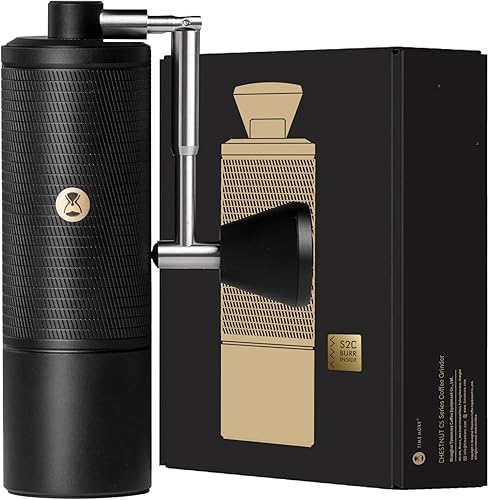
- 15-micron adjustment steps
- 42 mm stainless steel burr
- Foldable handle
- 25 g capacity
The C5 ESP Pro combines a 42 mm burr with 15-micron adjustment steps and a compact body. Its 25 g capacity suits smaller doses.
Pros
- Fine adjustment for espresso
- Foldable handle
- Easy to disassemble for brush cleaning
Cons
- 25 g capacity is the smallest stated here
- Adjustment levels are approximate
Timemore C5 ESP Pro uses a 42 mm stainless steel conical burr and adjusts by 15 microns per click. Its espresso-oriented design also covers French press and pour over, with about 50 adjustment levels.
The 25 g capacity suits smaller doses, and the 53 mm body is described as easy to grip, including for smaller hands. The handle folds for travel, and the grinder can be taken apart for brush cleaning.
Those details make it a compact choice for an espresso routine that values a finer adjustment pitch and a modest dose size. The capacity is lower than the 35–40 g catch cups on the 1Zpresso models.
Choose it for a compact body and 15-micron steps. For more room in the catch cup, the J-Ultra and K-Ultra offer higher stated capacities.
Timemore Chestnut C3 ESP Pro: Best for a clear espresso setting guide
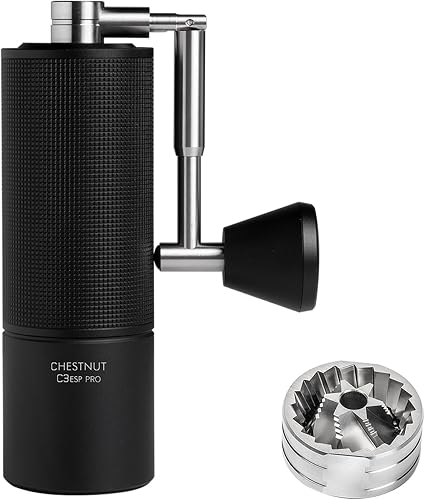
- 23.3-micron adjustment steps
- 38 mm stainless steel burr
- Foldable handle
- Espresso range marked
The C3 ESP Pro provides an espresso setting range marked at 0.8–1.1 circles. Its 38 mm burr and foldable handle make it a compact option for home or travel.
Pros
- Marked espresso setting range
- Foldable handle
- Easy brush cleaning
Cons
- Wider adjustment steps than several picks here
- 25 g capacity
The Timemore Chestnut C3 ESP Pro gives you a marked espresso setting range of 0.8–1.1 circles. Its adjustment moves by 23.3 microns per click, with a 38 mm stainless steel conical burr.
The 25 g capacity and foldable handle suit smaller doses and storage. It can also grind for pour over and French press, and the maker describes brush cleaning after disassembly.
The marked range offers a simple starting point when you are learning the grinder’s dial. Its adjustment steps are wider than those on the J-Ultra, K6 and C5 ESP Pro, so buyers who want finer changes may prefer those models.
Choose it for an espresso range marked on the adjustment dial. If you want smaller stated increments, the C5 ESP Pro provides 15-micron steps.
Timemore S3: Best for external point-to-point adjustment
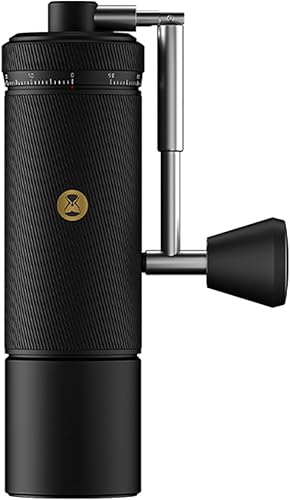
- External digital adjustment
- 15-micron adjustment grid
- 30 g capacity
- Foldable handle
The S3 has external point-to-point adjustment in 0.015 mm steps, with a display that avoids counting each grid. Its 30 g capacity and foldable handle suit a flexible home setup.
Pros
- External adjustment with digital scale
- Supports espresso and other methods
- Foldable handle
Cons
- Adjustment is described in grids rather than clicks
- Espresso workflow details are limited
Timemore S3 has external point-to-point adjustment in 0.015 mm steps, with a digital scale that lets you track settings to 0.1 grid. Its S2C890 steel burrs and 30 g capacity give it room for espresso and other brew methods.
The full metal body and foldable spring-assisted handle suit a home grinder that also needs to pack away. The adjustment description uses grids rather than clicks, so compare the dial format with how you prefer to record settings.
The S3’s stated adjustment pitch is 15 microns per grid, matching the C5 ESP Pro’s pitch by size. Its external scale may be useful if you want to return to a setting without counting each adjustment movement.
Choose it for an external digital scale and a 30 g capacity. If you prefer a stated espresso click size, compare the C5 ESP Pro or J-Ultra.
How we compared hand grinders for espresso
We compared the stated adjustment controls, capacity, catch cup, handle and cleaning details against the needs of home espresso. Our score weighs specs, features and buyer feedback against what you’re shopping for.
Fine adjustment received extra weight because espresso often needs small changes between shots. We also considered whether the grinder supports other brew methods, since some buyers want one manual grinder for more than espresso.
Which hand grinder fits your espresso routine?
Choose the J-Ultra if you want the smallest stated adjustment steps for espresso. Pick the K-Ultra if you want a grinder that also covers a broad set of brew methods, or the K6 if external adjustment and a metal body are your main priorities.
If you are still deciding between manual and powered grinding, use our manual vs electric coffee grinder comparison to match the workflow to your kitchen. For other manual options, see our best manual coffee grinders with steel burrs.
Our top 3 picks at a glance
-
1
-
2
-
3
Frequently asked questions
What matters most in a hand grinder for espresso?
Look for small adjustment steps and a stable way to repeat a setting. Espresso often needs fine changes to dial in a shot, so a grinder with 8-micron steps, such as the J-Ultra, offers more control than one with wider steps.
Capacity, catch cup design and cleaning also shape the daily routine.
Can a hand grinder grind fine enough for espresso?
Yes, several manual grinders are made for espresso or list espresso as a supported method. The J-Ultra has 8-micron adjustment steps, while the K-Ultra has more than 100 external clicks at 20 microns each.
Confirm that the grinder suits your espresso machine and preferred dose.
Is a hand grinder practical for daily espresso?
A hand grinder can fit daily espresso if you are comfortable turning the handle for each dose. Foldable handles and magnetic catch cups can simplify storage and transfer, while a larger capacity can help when preparing more than one drink.
Choose based on your routine, not portability alone.
Should I choose an espresso-only or all-round hand grinder?
Choose an espresso-focused grinder if espresso is your main brew method and small adjustment steps matter most. An all-round model such as the K-Ultra may fit better if you also make pour over, French press or cold brew.
A grinder used across methods needs a setting range that fits each brew.