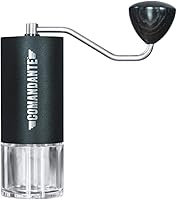
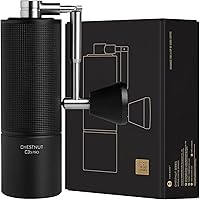
KINGrinder K6 vs Timemore C3 ESP Pro: Which Is Better? (November 2026)
Choose the KINGrinder K6 for a larger capacity and external adjustment, or the Timemore C3 ESP Pro for a lighter grinder with a folding handle. The right pick depends on your dose size, storage needs and how much adjustment detail you want.
On this page (6 sections)
Choose the KINGrinder K6 for a larger dose and external adjustment, or the Timemore C3 ESP Pro for a lighter body and folding handle. In this KINGrinder K6 vs Timemore C3 comparison, capacity, weight and adjustment style are the clearest differences.
The K6 has a 30 g capacity and weighs 630 g. The C3 ESP Pro holds 25 g and weighs 430 g, making it the lighter option for packing or carrying.
Both grinders use stainless steel conical burrs and are designed for multiple brewing methods. We compared their stated features and the related C3S Pro to show where each choice fits.

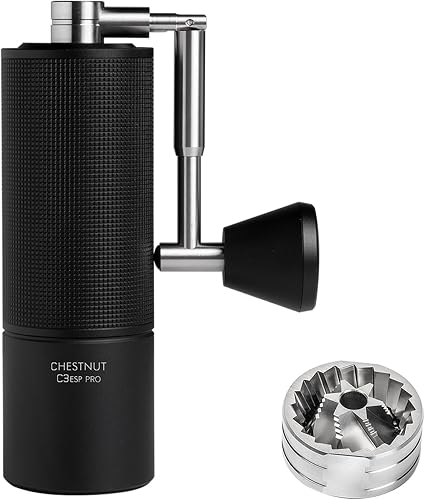
KINGrinder K6 vs Timemore C3: what changes?
The K6 offers a larger dose and external adjustment, while the C3 ESP Pro is lighter and has a folding handle. Those differences are more useful than choosing by brand name alone.
The K6 uses 16-micron steps, with 60 clicks per rotation and up to 4 full rotations. Its external adjustment lets you change settings without opening the grinder body.
The C3 ESP Pro has a stated adjustment pitch of about 0.0233 mm per click, or about 36 levels. Timemore describes it as designed for espresso, with settings also covering pour over and French press.
The K6's larger capacity can save a second fill for a dose above 25 g. The C3 ESP Pro is easier to carry at 430 g, and its handle folds for storage.
| Product | Best for | Capacity | Weight | Adjustment | Our score |
|---|---|---|---|---|---|
| KINGrinder K6 | larger doses | 30 g | 630 g | 16 microns per click; 60 clicks per rotation | 9.1 |
| Timemore Chestnut C3 ESP Pro | compact travel | 25 g | 430 g | 8.3 | |
| Timemore Chestnut C3S Pro | a straightforward Timemore option | 25 g | 430 g | 8.8 |
Which grinder is easier to carry?
The C3 ESP Pro is easier to pack because it weighs 200 g less and its handle folds. The K6 remains portable, but it is the heavier choice and its included handle is straight.
The C3 ESP Pro weighs 430 g and has a foldable crank handle. That design can make it easier to fit in a small bag or drawer.
The K6 weighs 630 g and includes a straight handle. Its 25 to 35 g hopper volume is listed separately from its 30 g capacity, so don't assume the same dose fit as the Timemore.
For a travel kit, consider more than weight. Think about the size of your usual dose, where you will store the handle and whether you want to brush the grinder clean after use.
If you're new to manual grinding, our guide to using a manual coffee grinder explains how to load beans, turn the handle and clean up after brewing. For other steel-burr options, see our best manual coffee grinders with steel burrs.
Which adjustment system makes more sense?
Choose the K6 for clearly counted external clicks, or the C3 ESP Pro if you want the finer adjustment pitch Timemore describes for espresso. Your preferred brew method and willingness to dial in settings should guide the choice.
The K6's adjustment ring has 60 clicks per rotation and a stated 16 microns per click. The external design makes changes easy to reach during a brew routine.
Timemore gives the C3 ESP Pro an adjustment pitch of about 0.0233 mm per click and about 36 levels. It also provides circle indicators for espresso, pour over and French press settings.
Those numbers describe different adjustment systems, so they don't alone prove which grinder produces better coffee. Use them as a guide to the amount of control each brand describes, then adjust for the beans and brewer you use.
Our best hand grinders for espresso guide can help if espresso is your main goal. For broader grinder choices, compare the best single dose grinders.
Is the C3 ESP Pro a better espresso grinder than the K6?
The C3 ESP Pro is the more explicitly espresso-focused option, with its finer adjustment pitch and espresso settings. The K6 also supports fine grinding and is described for espresso, but the supplied adjustment information emphasizes its external ring and 16-micron steps.
A finer stated step can make small changes easier, but it doesn't guarantee a better shot. Your coffee, espresso machine and dialing-in routine affect the result too.
If you switch between espresso and filter coffee, either grinder can cover multiple brew methods. Pick based on whether the finer ESP adjustment or the K6's external adjustment feels more useful to you.
How do capacity and dose size compare?
The K6 has a 5 g capacity advantage, so it suits a larger single dose. Both sizes can work for many home brews, but the amount you grind at once should decide.
The K6's stated capacity is 30 g, while both Timemore models are 25 g. A larger dose can help if you brew a bigger pot or prefer to grind all your beans in one fill.
If your recipe uses less than 25 g, capacity may not matter much. The lighter C3 ESP Pro can be the more convenient choice when portability or storage matters more than an extra 5 g.
Keep your dose and grind setting consistent when comparing cups. Our guides to pour-over grind size and French press grind size explain how grind size fits those brew methods.
What does the C3S Pro add to the comparison?
The C3S Pro is a lighter Timemore alternative with a folding handle and S2C660 burr, but it lacks the ESP Pro's stated finer adjustment pitch. It shares the same 25 g capacity and 430 g weight.
The C3S Pro has a full metal aluminum body and the S2C660 conical burr. Its handle folds for travel or storage, just like the ESP Pro.
Choose it if you want a compact Timemore grinder and don't need the ESP Pro's espresso-focused adjustment description. The comparison is useful because both models share the same capacity and weight, while their adjustment details differ.
Read our Timemore C3S Pro review for a closer look at that model. The KINGrinder K6 review covers the K6's external adjustment and larger capacity in more detail.
How should you choose between them?
Pick the K6 for larger doses and external adjustment; pick the C3 ESP Pro for lower weight, folding storage and espresso-focused adjustment. Choose the C3S Pro if you want a foldable Timemore option without prioritizing the ESP Pro's finer pitch.
- Choose the KINGrinder K6 if you often grind up to 30 g, want external adjustment or prefer a full metal body with a straight handle.
- Choose the Timemore C3 ESP Pro if you carry your grinder, want a folding handle and value its espresso-oriented adjustment.
- Choose the Timemore C3S Pro if you want the lighter Timemore format and S2C660 burr without the ESP Pro's stated finer adjustment.
For a wider look at hand grinders, browse our manual grinder picks. The best fit is the one whose capacity, weight and adjustment style match your usual brew.
Our score weighs specs, features and buyer feedback against what you're shopping for.
Frequently asked questions
Is the KINGrinder K6 better than the Timemore C3 ESP Pro?
The K6 is a better fit if you want a 30 g capacity and external adjustment, while the C3 ESP Pro suits you if lower weight and a folding handle matter more. Both are manual grinders with stainless steel conical burrs, so choose by dose, portability and adjustment style.
Which grinder is lighter?
The Timemore C3 ESP Pro weighs 430 g, compared with 630 g for the KINGrinder K6. That 200 g difference can matter in a travel kit or if you store the grinder between uses, though the K6 holds a larger stated dose.
Can the Timemore C3 ESP Pro grind for espresso?
The C3 ESP Pro is designed with espresso in mind and has a finer adjustment pitch of about 0.0233 mm per click, with about 36 adjustment levels. Choose a grind by dialing in your own coffee and brewer, since the ideal setting can vary.
What is the difference between the C3 ESP Pro and C3S Pro?
The C3 ESP Pro has a finer stated adjustment pitch and is positioned for espresso, while the C3S Pro uses the same 25 g capacity, 430 g weight and foldable handle with the S2C660 burr. Pick the ESP Pro when fine adjustment is a priority.