What Grind Size Works Best in a French Press?
Use a coarse, fairly even grind for French press coffee. If the cup tastes weak, try grinding a little finer; if it tastes bitter or gritty, go coarser.
On this page (7 sections)
- What grind size for French press should you start with?
- How do you adjust the grind if the coffee tastes off?
- Which grinder features help with French press?
- Can you use pre-ground coffee in a French press?
- Why is there sediment in the cup?
- How does French press grind size compare with other methods?
- What is the simplest way to dial in a French press?
Use a coarse, fairly even grind for French press coffee. If the brew tastes weak, try a little finer; if it tastes bitter or gritty, go coarser.
The right setting depends on your beans, water, and steeping routine, so treat “coarse” as a starting point rather than a fixed number. French press uses immersion brewing, and a consistent grind makes it easier to adjust one variable at a time.
What grind size for French press should you start with?
Start with grounds that look similar to coarse sea salt. Avoid powdery pieces and aim for a batch that looks reasonably even.
A coarse grind is less likely to slip through the mesh filter than fine coffee. Some sediment is normal, but too many small particles can leave a heavier layer at the bottom of the cup.
Grinder numbers aren't universal. A “6” on one grinder may not match a “6” on another, so use the appearance of the grounds and the taste of the brew as your guide.
For a broader explanation of burr types and what to consider, see how to pick a burr grinder. If you're new to the equipment, how to use a burr coffee grinder covers the basic steps.
How do you adjust the grind if the coffee tastes off?
Change the grind a little at a time and taste the next brew. Keep your other steps the same so you can tell whether the adjustment helped.
If the coffee tastes weak or thin, move slightly finer. Smaller particles expose more surface area during brewing, which can help the water extract more from the grounds.
If it tastes bitter, harsh, or leaves more grit than you like, try a coarser setting. A coarse grind won't fix every cause of bitterness, but it is a useful first adjustment.
Don't jump from very coarse to very fine in one move. Small changes make it easier to find a setting that suits your beans and your preferred cup.
Should French press grounds all be the same size?
Grounds should be similar in size, not perfectly identical. A more even batch helps you avoid having some particles extract much faster than others.
A burr grinder gives you settings for making repeatable changes. For a manual option, see how to use a manual coffee grinder.
Which grinder features help with French press?
A grinder for French press needs a coarse setting and enough adjustment to tune the cup. Consider how clearly its controls let you repeat a setting, especially if you also make other brew styles.
The OXO Brew Conical Burr Grinder has 15 settings plus 43 micro-adjustments, and its coarse range includes French press and cold brew. Its one-touch start remembers the last setting.
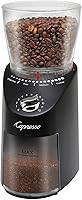
The Capresso Infinity Plus has 16 grind settings, from extra fine to very coarse for methods including French press. Its removable ground coffee container holds up to 4 oz.
KitchenAid's Burr Grinder KCG8433 offers 70 settings from coarse for French press and cold brew to fine for espresso. Its Smart Dosing Technology automatically adjusts grind time for the selected drink.
Choose the grinder whose range and controls suit how you brew. The OXO grinder guide covers more electric options, while pour-over grind size explains why a different brew method may call for another setting.
Can you use pre-ground coffee in a French press?
Yes, you can use pre-ground coffee, but coarse grounds are a better starting point for a press with a mesh filter. If the available grind is finer, expect a cup with more sediment and adjust how you pour.
Pour gently and stop before the last cloudy layer at the bottom. If the coffee tastes too strong or bitter, shorten the steep slightly or use a coarser grind next time.
Why is there sediment in the cup?
A French press filter holds back most grounds, but it doesn't make the coffee particle-free. A little sediment is normal because fine particles can pass through the mesh.
Letting the coffee settle briefly after pressing can help. When serving, pour slowly and leave the final sip in the carafe rather than chasing every drop.
If grit remains a problem, try a coarser setting and check that the filter is assembled correctly. A different grinder may produce a more even mix, but no grind setting removes all sediment from this brewing style.
How does French press grind size compare with other methods?
French press generally uses coarser grounds than pour-over or drip coffee. Those methods use filters and brewing routines that often call for a finer starting point.
Cold brew also commonly uses coarse grounds, though the steeping process differs. See what grind size works for cold brew before using the same setting for both.
Use each method's recommended range as a starting point, then make small changes for your beans and taste. You can also compare grind size for drip coffee if you switch between a press and a drip machine.
What is the simplest way to dial in a French press?
Start coarse, brew your usual cup, then adjust one step at a time based on taste and sediment. Go finer for a weak cup and coarser for a bitter or overly gritty one.
Keep notes on the grinder setting and the result. A repeatable setting makes it easier to return to a cup you like, even when you later try a new bean.
For most people, the best French press grind is the coarsest setting that still makes a full-flavored cup. If you want to explore a wider range of settings, compare the grinder features above and choose one that fits your other brewing habits.
Frequently asked questions
What grind size is best for French press coffee?
Start with a coarse grind, with pieces that look similar in size to coarse sea salt. Use a consistent grind and adjust after tasting: go finer if the coffee seems weak, or coarser if it tastes bitter or leaves heavy sediment.
Can I use medium grind in a French press?
You can, but medium grounds may pass through the mesh more easily and can make the cup muddier. If coarse grounds taste too weak, move only a little finer at a time, then keep the new setting if the cup tastes balanced.
Why is my French press coffee gritty?
Grit can come from fine grounds passing through the press filter, though some sediment is normal with this brew method. Try a coarser setting, pour gently, and leave the final bit of coffee in the press instead of tipping it into the cup.
Does a burr grinder matter for French press?
A burr grinder gives you settings to adjust grind size for French press and other brew methods. Choose one with a coarse range and enough steps to make small changes; then use taste and sediment to guide your setting.