Coffee Grinder vs Blender: Which Grinds Coffee Better? (November 2026)
A coffee grinder wins the coffee grinder vs blender question for making coffee. Blades made for coffee spin beans into an even grind you can adjust, while a blender's job is wet mixing, so dry beans tumble and scatter.
On this page (8 sections)
A coffee grinder wins for making coffee. The coffee grinder vs blender question has a clear answer: a grinder is built to turn beans into an even, adjustable grind, and a blender is built to mix wet ingredients.
The KRUPS Precision Electric Coffee Grinders take the top spot here with a 200W motor and a 3 oz hopper. A blender like the magic bullet can chop beans in a pinch, but the grounds come out uneven.
Below, the comparison covers grind quality, capacity, cleanup and who should buy which machine.

 Best for easy cleanup
Hamilton Beach Fresh Grind Electric Coffee Grinder
Coffee grinder vs blender: which one grinds coffee better?
The coffee grinder grinds better, and it is not close. Its blades and hopper are designed around dry beans, so you get control over how fine the grounds end up.
The KRUPS has a 200W motor and stainless steel blades inside an 85 g hopper. Press and hold the button, and grind time sets the texture.
A blender's cross blade sits at the bottom of a tall cup built for fruit, ice and liquid. Dry beans bounce off it and settle in uneven patches.
That difference shows up in the cup. Coffee needs particles of a similar size so water passes through them at the same rate.
Uneven grounds leave you with a mix of over-extracted powder and under-extracted chunks. The coffee tastes bitter and sour at once.
What a blender does to coffee beans
A blender will break beans down, but it tends to leave a mix of dust and coarse pieces. The cross blade is shaped for wet ingredients, so it doesn't grab dry beans the same way.
The magic bullet's cross blade is stainless steel and its cups are BPA-free plastic. That build is meant for fruit, ice and liquid in a 22 fl oz cup, not a handful of dry beans.
A small load of beans in a tall cup sits at the bottom with lots of empty space above it. The blade spins, the beans jump, and the result is patchy rather than fine.
Shaking the cup between pulses helps a little. It still won't match a tool made for the job, so treat blending as an emergency option.
Grind control and consistency
The coffee grinder gives you control by time; the blender gives you speed you can't fine-tune. For brewing, control is the whole point.
The KRUPS runs on one-touch operation. Press and hold to reach the grind you want, from coarse for cold brew and French press to fine for espresso.
That range covers drip, pour-over, French press, cold brew and espresso. The longer you grind, the finer the result.
The Hamilton Beach Fresh Grind works the same way: place the lid, press the button, release to stop. You learn the timing for your own pot.
The magic bullet has a single fixed speed. That's fine for smoothies, where you blend until the texture looks right, but it gives you no plan for coffee.
Does grind evenness really change the taste?
Yes, and most drinkers notice it first in pour-over and espresso. A mix of fine and coarse particles extracts at different rates, so the cup can taste muddy.
Drip coffee hides some of that. Espresso does not, because the puck needs an even bed for water to pass through.
Our guide on an espresso grinder vs coffee grinder explains why espresso is the strictest test of grind quality.
If you brew espresso at home, budget for a burr grinder. A blade grinder can get close, but the results shift from shot to shot.
The pulse method for blade grinders
A blade grinder rewards a light hand. Load the hopper, press in short bursts of a few seconds, and shake the grinder between bursts so the grounds land back under the blades.
Stop early and check the texture rather than running the motor until the beans look fine. Long runs build heat, and warm beans lose some of the aroma that makes fresh grinding worth the effort.
Both coffee grinders here reward this method. The KRUPS has a simple press-and-hold button with no timer, so the pulse count is yours to set.
Capacity: cups per batch
Both coffee grinders here handle a full pot, while a personal blender is sized for single servings. Choose capacity around how many cups you brew at once.
The KRUPS hopper holds 3 oz or 85 g, enough for up to 12 cups. That suits a household, a small office or someone grinding spices in batches for meal prep.
The Hamilton Beach is also rated to grind enough for up to 12 cups. Its 4.5 oz bowl is the larger of the two, so it can take a bigger load of beans.
The magic bullet's 22 fl oz cup is built for one smoothie at a time. It's not a coffee batch tool, and filling it with beans wastes the cup's real purpose.
Grinding for a crowd
If you regularly brew a full pot, the 12-cup rating on either coffee grinder matters more than blade speed. Load the hopper, grind, and brew without stopping.
For a single cup, smaller batches are easier to control. Grind what you need, then store the beans whole.
Grinding spices and nuts in batches
The KRUPS capacity also earns its keep away from coffee. Its 3 oz hopper is roomy enough for meal prep batches of spices, herbs and nuts, so you can grind enough for several recipes in one go.
The manufacturer lists grinding nuts for baking and preparing grains for homemade flour among its uses. That range is wider than most people expect from a coffee tool.
Batch grinding saves time on a week of cooking. It also means one less appliance on the counter, since the same grinder covers coffee and cooking.
Cleanup and counter space
The Hamilton Beach is the easiest to clean of the three, because its grinding bowl lifts out and is dishwasher safe. Coffee oils build up, so removable parts help.
The Hamilton Beach bowl comes out for filling and pouring, and it goes in the dishwasher. Hidden cord storage tidies the base between uses.
The KRUPS has a fixed chamber, so you wipe it rather than wash it. Its compact build fits on a countertop or in a cabinet, and the black finish blends into most kitchens.
The magic bullet twists apart for cleaning. Its cups go on the top rack of the dishwasher, and the blade rinses under the tap.
None of these take much room. The magic bullet is the bulkiest at about 4.5 x 4 x 11.6 inches, but it's still a countertop unit.
The KRUPS measures about 4 x 3.9 x 8.2 inches and weighs 1.8 pounds. The Hamilton Beach is smaller still at roughly 3.7 x 3.5 x 7.1 inches and 1.3 pounds.
Keeping coffee oils in check
Wipe the chamber after each coffee batch, and grind a small amount of dry rice now and then to freshen a blade grinder. Store beans whole until you brew.
Choosing where the machine lives
The two coffee grinders fit in a cabinet or on the counter without crowding anything. That matters in a small kitchen where a blender already takes up space.
The Hamilton Beach is the smallest of the three and the lightest. Its hideaway cord means you can put it away without a cable trailing across the counter.
Safety and everyday use
The coffee grinders here are built for dry grinding, with safety features that suit the job. Both have lid-activated designs that keep blades still until the lid is secure.
On the KRUPS, the safety mechanism stops the blades unless the lid is in place. That's worth knowing if kids share the kitchen.
The Hamilton Beach asks the same simple routine: place the lid, press, release. There's no timer to set or dial to learn.
The magic bullet's cross blade locks into the cup before the motor runs. It's safe for its intended work, but dry beans aren't that work.
Warranty and build
All three come with a one-year warranty from the manufacturer. The two grinders are plastic-bodied with stainless steel blades, and the magic bullet mixes plastic and stainless steel too.
The KRUPS model number is F20342 and the Hamilton Beach is model 80335R. The magic bullet is model MBR-1101AK.
Matching those numbers helps if you ever need service.
Using a grinder for spices and seeds
Both coffee grinders also handle herbs, spices, nuts and seeds, which stretches their value beyond coffee. The Hamilton Beach names peppercorns and fennel, plus sesame, flax and chia seeds.
The Hamilton Beach Fresh Grind grinds flax, chia and sesame for smoothies. Keep a second grinder if you grind strong spices often, since coffee picks up those flavors.
That's a small cost next to replacing a whole machine.
Which coffee grinder should you buy?
Buy the KRUPS for daily coffee and the Hamilton Beach for easier cleaning. Both grind for a full pot, and the choice comes down to how you like to work.
The KRUPS takes the higher score for its one-touch control and wide grind range. It covers cold brew, French press, drip, pour-over and espresso from one hopper.
The Hamilton Beach wins on upkeep. The removable, dishwasher-safe bowl makes filling and washing simpler, and cord storage keeps the counter tidy.
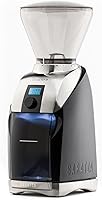
If you want a burr grinder for espresso, look at a model made for it. Our Baratza Virtuoso review covers one option that suits that job.
Best for everyday coffee: KRUPS Precision
The KRUPS earns the top score because it does the everyday job well. One button, a hopper sized for a full pot, and a grind range that follows your brew method.
Its blades are stainless steel and the motor is 200W. The black body is plastic, and the compact shape fits on a shelf.
It grinds spices, herbs and nuts too, so it earns its place beyond coffee. The one-year warranty matches the other grinders in this class.
Best for easy cleanup: Hamilton Beach Fresh Grind
The Hamilton Beach makes a small daily chore easier. The bowl lifts out for filling and pouring, then goes in the dishwasher.
Its stainless steel blades take on coffee, peppercorns, fennel and seeds like sesame and chia. That makes it useful for smoothies, shakes and cooking.
A single button runs the grind, and releasing it stops the motor. The hideaway cord storage keeps the base neat between uses.
Is a blender ever the right pick?
A blender is the better pick only if you want smoothies, sauces and dips more than coffee. The magic bullet blends wet ingredients in seconds.
Its 250W motor and stainless steel cross blade turn fruit and ice into drinks. The set includes a tall cup, a short cup, a party mug, lip rings and lids.
If you already own a grinder and want a second machine for drinks, the blender adds something new. It doesn't replace the grinder.
Coffee grinder vs blender: the verdict
For coffee, buy the coffee grinder. The KRUPS Precision Electric Coffee Grinders take the top score for control and capacity, and the Hamilton Beach Fresh Grind is the easier one to clean.
A blender grinds beans unevenly and has no way to adjust the texture. That matters most for espresso, and it shows up in any brew where you taste the difference.
Pick the blender only if your real goal is smoothies and wet mixing. If you want to try hand grinding first, our manual vs electric coffee grinder guide lays out the tradeoffs before you buy.
Frequently asked questions
Is a blade coffee grinder as good as a burr grinder?
A burr grinder gives more even particles, which matters most for espresso and pour-over. A blade grinder like the KRUPS is cheaper and fine for drip and French press, where you shake the grounds and accept some variation.
How long should you grind coffee in a blade grinder?
Pulse in short bursts of a few seconds and check the texture between pulses. Longer runs heat the beans and push the grind finer than you planned, so stop early and shake the hopper to even things out.
Do you need a separate grinder if you own a blender?
Yes, if you drink coffee. The magic bullet is a wet blender with a cross blade, so it struggles with dry beans.
A small electric coffee grinder takes little counter space and gives you grounds made for brewing.