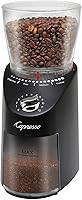
How to Fix a Capresso Coffee Grinder
To fix a Capresso coffee grinder machine, unplug it, empty the hopper and grounds bin, and clear packed coffee from the burrs and chute first, since clogs and safety interlocks cause most stops. If it still won't run, check the lid and bin seating, the outlet and the burr seating before anything else.
On this page (8 sections)
- Why won't my Capresso grinder turn on?
- How do I clear a jammed Capresso grinder?
- What causes uneven or slow grinding?
- What should I check inside the Infinity Plus?
- How do I fix static and clinging grounds?
- When is it a power or motor fault?
- How do I keep a Capresso grinder running?
- Is a Capresso grinder worth fixing?
To fix a Capresso coffee grinder machine, unplug it, empty the hopper and grounds bin, and clear packed coffee from the burrs and chute first, since clogs and safety interlocks cause most stops. If it still won't run, check the lid and bin seating, the outlet and the burr seating before anything else.
Most Capresso problems are not broken motors. They are coffee where coffee shouldn't be, a part sitting a millimeter off its seat, or a simple power fault.
Work through the checks below in order and you'll solve the common ones in a few minutes.
Why won't my Capresso grinder turn on?
Check the outlet and cord before the machine. Plug a lamp into the same outlet, confirm the breaker is on, and look for a damaged cord or a plug that isn't fully seated.
If power is fine, look at the safety lock. Capresso designs its grinders so the machine won't run unless the lid and the grounds container are in place.
A bin pushed in at an angle, or a lid resting on a crumb, can leave the switch open.
Unplug the grinder and reseat each removable part firmly. Press down on the lid and listen for it to settle.
Then plug back in and try a short pulse.
One more seating detail matters on the Infinity Plus. The grounds container holds up to 4 oz, and it has to slide fully home or the safety lock stays open.
Pull it out, tip out any grounds caught on the rim, and push it back until it stops flat.
If nothing happens at all, the machine has stopped responding rather than jammed. Our guide to a coffee grinder not working walks through the order of checks for a dead machine.
How do I clear a jammed Capresso grinder?
Unplug it, then empty the hopper and scoop out the grounds bin. Most jams sit in the chute between the burrs and the bin, or packed around the lower burr.
Use a soft brush or a wooden stick to loosen the packed coffee. Never push a screwdriver or knife into the chute, because metal can chip the burr edges and damage the housing.
Remove the upper burr if your model allows it, following Capresso's cleaning steps. Brush both burr surfaces and the chute, then refit the burr and turn it until it seats.
Try a small amount of coffee on a coarse setting first. A coarse grind moves through the chute more freely and tells you quickly whether the path is clear.
If the motor hums but the burrs stay still, stop. A hum with no movement means something is blocking the burrs, and forcing it can burn out the motor.
What to do when the jam sits at the burrs
A jam right at the burrs is the stubborn one. Lift the upper burr out and look for beans wedged between the two steel cones or packed in the gap around the lower burr.
Brush the cone surfaces clean and check that no bean fragment is caught in the threads where the upper burr screws down. A fragment there holds the burr up off its seat and the grinder stalls on the first pulse.
Refit the upper burr and turn it until it settles without force. Then run a short pulse with the hopper empty to confirm the motor turns free before you add beans back.
What causes uneven or slow grinding?
Packed grounds, oily beans and a nearly full bin slow the grind. Empty the bin before it fills to the top, since grounds back up into the chute and reduce flow.
Dark, oily beans leave residue on the burrs that makes the grind slower and less even. Brush the burr area weekly if you roast dark, and run a small amount of dry raw rice through only if Capresso's instructions for your model allow it.
Set the grind size while the burrs are empty, not while they're full of beans. Adjusting a loaded grinder can wedge beans between the burrs.
The Infinity Plus has 16 grind settings from extra fine for Turkish to very coarse for percolators and cold brew. If one setting suddenly grinds like another, the burr is probably not seated.
Remove it, brush it and refit it until it clicks into place.
A bin that is only part full still backs up if the chute above it is packed. When the grind slows mid batch, stop, empty the 4 oz bin and brush the chute before you carry on.
Pushing through a partial clog is what turns a slow grind into a full stall.
What should I check inside the Infinity Plus?
Check the burr seating, the chute and the bin seal on the Infinity Plus. The upper burr lifts out for cleaning, and it only grinds properly when it sits flat and locked.
Capresso gives it solid steel conical burrs and a gear reduction motor that runs slowly to cut friction and heat. That slow speed protects flavor, but it also means a small blockage stalls the grind rather than pushing through it.
Clear it early.
The bin holds up to 4 oz of ground coffee and the bean container holds 11 oz. Grinding a full hopper in one go fills the bin close to the top, so empty it partway through a big batch.
The body is ABS plastic and the whole unit weighs 4 pounds, so it stays put on the counter while you work. A light machine can slide when the burrs stall, so hold the base steady with one hand on the first pulse after a clean.
How do I fix static and clinging grounds?
Let the grounds rest a moment and stir them before you dose. Static builds up when the grinds rub against plastic, and a spoon stir releases most of it.
A slightly damp spoon handle works too, but don't add water to the bin. Wipe the bin with a barely damp cloth and let it dry fully before refilling, and keep the machine away from dry, windy spots.
If grounds cling inside the chute and slow the flow, a full clean of the grind path solves it. Our coffee grinder static fix covers the rest of the tricks for sticky grinds.
Static gets worse in dry winter air. Expect more clinging in January than in July, and clean a little more often in that season.
The plastic grounds container is the main place static shows up. Tap it on the counter edge before you pour, and most of the clinging layer drops free without a wipe.
When is it a power or motor fault?
A grinder that is silent after the outlet, lid and bin checks has a fault you can't fix at home. Don't keep pressing the button, because a stalled motor can overheat.
Signs point in different directions. A hum with no movement is usually a jam.
A click and nothing else suggests the safety switch. Silence means power or the motor.
Capresso backs household use with a 1 year limited warranty. If your grinder is inside that window, contact Capresso support before opening the housing, since taking it apart can end the coverage.
Out of warranty, a burnt smell or a grinding noise from the motor means the repair often costs more than the grinder. That is the point to replace rather than fix.
The Infinity Plus runs on 120 volts and 100 watts. Check the label under the base matches your outlet before you blame the machine, since a grinder bought for another country won't run properly on a household circuit here.
How do I keep a Capresso grinder running?
Empty the bin after each use and brush the burr area weekly. Small habits prevent most of the jams covered above.
Store beans in the hopper only for a few days, because oils and moisture build up and coat the burrs. Weigh beans and grind what you need instead of leaving a full hopper to sit.
Follow the right order when you grind. Our guide to how to use a burr coffee grinder covers setting the grind, dosing and the pulse technique that keeps the chute clear.
Set the grind size with the burrs empty, pulse in short bursts rather than holding the button, and never grind past the point where the bin is full.
The 11 oz hopper is a handy size for a week of beans, not a storage jar. Fill it to what you'll grind in a few days, and the burrs stay cleaner between deep cleans.
Is a Capresso grinder worth fixing?
Fix it if the fault is a clog, a seating issue or a power hiccup, because those cost nothing to solve. Replace it when the motor fails or the burrs are damaged.
The Infinity Plus is a reasonable machine to keep going. Steel conical burrs are built to take years of daily grinding, and the removable upper burr makes cleaning simple.
Most of its life depends on how well you clear the grind path.
If you're weighing an upgrade, our take on whether a burr grinder is worth it explains what a better grinder actually changes in the cup.
So when you ask how to fix a Capresso coffee grinder machine, start with the boring checks. Power, lid, bin, jam, burrs, in that order.
Most of the time one of them is the whole answer, and the grinder grinds again in the time it takes to rinse a brush.
Frequently asked questions
Why did my Capresso grinder stop working?
Most stops come from a clogged chute or burr area, a bin or lid that isn't seated, or a tripped outlet. Unplug it, empty and clean the grind path, then reseat every part before trying again.
Can I fix a Capresso grinder that won't spin?
If the motor hums but the burrs don't turn, coffee is likely jammed around them. If there's no sound at all, check the outlet, cord and safety lock before assuming the motor has failed.
How often should I clean a Capresso grinder?
Clean the grounds bin after each use and brush the burr area weekly in heavy use. A quick clean keeps the grind path open and stops stale oils from building up on the steel.
When should I stop fixing and replace the grinder?
Stop when the motor doesn't respond after the basics, the burrs are chipped, or a part is cracked. A grinder under its 1 year limited household warranty should go to Capresso support before you take it apart.