Types of Coffee Grinders for Home Use
The main types of coffee grinders for home use are blade, conical burr and flat burr grinders, each sold as either a hand grinder or an electric model. Pick a burr grinder in most cases, and choose a hand grinder when you want quiet, compact grinding.
On this page (10 sections)
- What types of coffee grinders for home use exist?
- How do blade grinders work, and who should buy one?
- How do conical burr grinders work?
- How do flat burr grinders differ from conical burrs?
- Are hand grinders or electric grinders better for home use?
- Which grinder type fits each brew method?
- Which grinder should most home brewers buy?
- How should you compare grinders before buying?
- How do you maintain each grinder type?
- What's the bottom line on grinder types?
The main types of coffee grinders for home use are blade, conical burr and flat burr grinders, and each is sold as a hand grinder or an electric model. For most homes, a conical burr grinder is the right type because it gives you adjustable, even grounds across brew methods.
A blade grinder only makes sense if you brew coarse coffee and want the lowest cost.
The type you choose shapes how even your grounds are, how much control you get and how much counter space you give up. This guide walks through each type, what it does well and the buyer it fits.
If you already own a burr grinder, our guide on how to use a burr coffee grinder covers setup and daily dialing in.
What types of coffee grinders for home use exist?
Home grinders fall into two families: blade grinders and burr grinders, and burr grinders split again into conical and flat designs. Within each family you also choose between a hand-cranked model and an electric one.
Those two choices, the cutting mechanism and the power source, define every grinder you'll see on a store shelf.
Here's how the types line up.
| Type | How it grinds | Best fit |
|---|---|---|
| Blade | A spinning blade chops beans | Coarse brewing on a budget |
| Conical burr | Cone-shaped burrs crush beans between surfaces | Most home brew methods |
| Flat burr | Flat discs grind beans between them | Espresso and precise repeatability |
| Hand grinder | You crank the burrs by hand | Small batches, quiet kitchens |
| Electric grinder | A motor turns the burrs | Daily volume and timed dosing |
The mechanism decides how even the particles are. The power source decides how much effort and counter space the grinder asks of you.
Get both right and the rest is details.
Start with the burr family unless cost or counter space rules it out. A blade grinder can still make decent coarse coffee, but it gives you less control over the result.
How do blade grinders work, and who should buy one?
A blade grinder uses a spinning metal blade to chop beans into fragments, and it's the simplest and cheapest type. You load beans, press the lid and pulse until the grounds look right.
There's no numbered setting to repeat, so each batch can come out a little different.
The trade-off is evenness. A blade strikes larger pieces more often than small ones, so a single batch holds both powder and coarse chunks.
That mix extracts unevenly, which shows up most in espresso and pour-over. For a French press or a cold brew steep, the coarse setting hides more of the unevenness.
Blade grinders are small and easy to store. Many double as spice grinders, though flavors can carry over between uses.
Our post on whether you can I use coffee grinder for spices explains how to keep those jobs separate.
Buy a blade grinder only if you brew coarse coffee and want the lowest entry cost. If you drink espresso or pour-over, put the money toward a burr grinder instead.
How do conical burr grinders work?
A conical burr grinder feeds beans between a cone-shaped inner burr and a ring-shaped outer burr, crushing them to a set gap size. The gap controls how fine the grounds come out, and numbered settings let you return to the same point.
Even particles are the payoff: the grounds extract at a more consistent rate, so the cup tastes cleaner and more balanced.
Conical burrs are the common choice for home grinders because they handle a wide range from espresso to French press. They also run cooler than a blade at the same speed, which helps protect aroma.
Most electric burr grinders you'll find in the mid-range use conical burrs.
The main costs are price and size. A good conical burr grinder asks more than a blade model and takes up more counter space.
You also need to set the grind before brewing rather than pulsing by eye.
Choose conical burrs if you want one grinder for most brew methods. It's the type we'd recommend first to a home brewer moving up from a blade grinder.
Not sure the extra spend pays off?
Read is a burr grinder worth it for the honest comparison.
How do flat burr grinders differ from conical burrs?
Flat burr grinders grind beans between two parallel discs, and they're the type most often chosen for espresso. The flat surfaces produce a narrow spread of particle sizes, which gives an espresso shot more predictable resistance and flavor.
That precision is why many espresso-focused grinders use flat burrs.
Flat burrs usually cost more than conical models at the same build quality. They also tend to run hotter and are often noisier.
For filter coffee, the difference between flat and conical is small enough that most home brewers won't notice it in the cup.
If espresso is your daily drink and you want repeatable shots, flat burrs earn their place. If you brew drip, pour-over or French press, a conical burr grinder does the job for less.
The type matters most when you're chasing the last bit of control at the fine end.
Pick flat burrs for espresso precision; pick conical for general brewing. Most first-time buyers land on conical and won't regret it.
Are hand grinders or electric grinders better for home use?
Neither is better in general: hand grinders suit small batches and quiet kitchens, while electric grinders suit daily volume and convenience. The right answer depends on how many cups you brew and how much counter space you have.
A hand grinder asks for a minute of cranking; an electric model asks for an outlet and a spot on the counter.
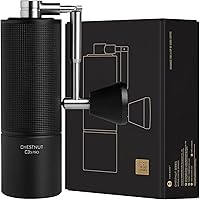
A hand grinder is compact enough to store in a drawer and quiet enough to use before anyone wakes. It gives you full control over the grind because you feel the resistance as you crank.
The effort grows with fine settings, so espresso by hand takes more work than a coarse French press grind. Our guide on how to use a manual coffee grinder walks through the grind and care routine.
An electric grinder takes the labor out of daily brewing. It holds beans in a hopper, often doses by time and can grind straight into a portafilter or container.
The cost is more counter space, more noise and a higher price.
Choose a hand grinder for one or two cups and a small kitchen; choose electric for family brewing and timed dosing. Either type can be a burr grinder, so the mechanism still matters most.
Which grinder type fits each brew method?
Match the grinder type to the grind your brew method needs, then decide on the power source. Espresso wants a very fine, repeatable grind, while French press and cold brew want coarse grounds.
Pour-over and drip sit in the middle. A grinder that covers the full range lets you switch methods without buying another machine.
For espresso, look for fine settings and a burr mechanism that holds its gap. A conical burr grinder with many settings can work, and a flat burr model gives more precision at the fine end.
For filter coffee and French press, most burr grinders do well and the setting range is less demanding.
A blade grinder can cover coarse brewing, but it's a poor fit for espresso and pour-over. If you brew several methods and want one grinder, a burr model with a broad setting range is the safer pick.
Pick a burr grinder with a wide setting range if you brew more than one method. If you only ever make French press, a simpler grinder can be enough.
Which grinder should most home brewers buy?
For most home brewers, an electric conical burr grinder with a wide setting range is the best type, because it covers espresso through French press and doses consistently. It costs more than a blade grinder, but the even grounds and repeatable settings pay off cup after cup.
These three models show the range within that type.
Breville Smart Grinder Pro: the most adjustable option
The Breville Smart Grinder Pro is a programmable conical burr grinder with 60 grind settings. That range covers espresso, drip and French press, and the digital time control lets you set the dose in 0.2 second increments.
It also grinds directly into a portafilter, an airtight container, a gold tone filter basket or a paper filter.
The LCD screen shows the grind setting, grind time and the number of shots or cups you've selected. Included accessories are a small 50–54mm portafilter cradle, a large 58mm cradle, a grinds container with a sealing lid and a cleaning brush.
Breville backs it with a 2 year limited warranty, and the 18 oz hopper holds plenty of beans. At 6.28 x 8.46 x 15.33 in and 6.4 lb, it needs a set spot on the counter.
Choose it if you want one grinder for espresso and filter coffee with repeatable timed doses. The 60 settings and 0.2 second control make it the easiest of the three to dial in for multiple methods.
It's also the priciest, so it suits someone who'll use the range.
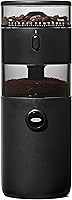
OXO Brew Conical Burr Grinder: the simple daily driver
The OXO Brew Conical Burr Grinder uses 40mm stainless steel conical burrs and offers 15 grind settings plus 43 micro-adjustments. It covers fine espresso through coarse French press and cold brew.
One-touch start remembers your last setting, so you don't reset it each morning. The removable 12 oz hopper has a UV-blocking tint to shield beans in sunny kitchens.
It's compact at 7.5 x 5.3 x 12.9 in and 4.5 lb, so it fits a smaller counter. A dial handles grind time, and the grind size has its own settings.
OXO backs it with a two-year warranty. For a brewer who wants burr evenness without a programming routine, it's the easiest to live with.
Choose it if you want a straightforward burr grinder for daily filter coffee and the occasional espresso. The remembered setting and one-touch start keep the routine short, and the smaller footprint helps in tight kitchens.
Baratza Encore: the entry-level workhorse
The Baratza Encore uses 40mm commercial-grade conical burrs and offers 40 grind settings for espresso, AeroPress, Hario V60, Chemex, French press and automatic brewers. A front-mounted pulse button and a simple on/off switch make grinding easy.
The hardened alloy steel burrs are made in Liechtenstein, and Baratza backs the grinder with a 1 year warranty.
It's small at 5.91 x 5.12 x 13.39 in and 5.6 lb, with a 300g hopper. Baratza grinders carry a Specialty Coffee Association award, and this is the brand's best-selling home model.
There's no built-in scale or timed dose, so you measure coffee separately. That simplicity is part of the appeal.
Choose it if you want reliable burr grinding across brew methods at an entry-level price. The 40 settings and pulse control keep it flexible, and the small footprint suits kitchens short on counter space.
If espresso is your main brew, the Encore's controls may feel less precise than a timed model.
How should you compare grinders before buying?
Compare grinders on five things that change how you use them: the burr type, the number of settings, the dosing method, the hopper size and the footprint. These decide whether the grinder fits your brew method and your counter.
Price matters, but it's the last check once the type is right.
The burr type sets the ceiling on evenness. Conical burrs handle most home brewing, while flat burrs give more precision for espresso.
The number of settings shows how finely you can adjust, so a wide range helps if you brew more than one method. Dosing by time or by one-touch start saves effort each morning.
Hopper size decides how often you refill beans. A 12 to 18 oz hopper suits most homes, while a smaller 300g hopper means more frequent top-ups.
The footprint and weight matter if counter space is tight or you store the grinder between uses. Check the warranty too, since burr grinders last years and support matters.
Decide the burr type and setting range first, then pick the dosing and footprint you can live with. That order keeps you from paying for features that don't fit your brewing.
How do you maintain each grinder type?
Every grinder type needs regular cleaning to keep grounds fresh and the mechanism running smoothly. Blade grinders and burr grinders differ in how often and how carefully you clean them.
Skip it and stale oils build up, which dulls the flavor of every cup.
For a blade grinder, brush out the bowl after each use and wipe it dry. Wash only removable parts if the maker allows it.
For a burr grinder, brush the burrs and chamber every few weeks and do a deeper clean when you switch beans. A cleaning brush comes with many models, including the Breville Smart Grinder Pro.
Empty the hopper if you won't grind for a while so beans stay fresh. Wipe the body with a dry or barely damp cloth and never put an electric grinder in water.
Keep the burrs dry and free of coffee dust to protect the grind setting.
Clean the burrs and chamber every few weeks, and wipe the body only as directed. Regular care keeps the even grind you paid for, and it extends the life of the burrs.
What's the bottom line on grinder types?
The best type of coffee grinder for most homes is an electric conical burr grinder, and among the three here the Breville Smart Grinder Pro is the pick for its 60 settings and 0.2 second timed dosing. The OXO Brew suits a simpler daily routine, and the Baratza Encore is the entry-level choice for brew-method range.
A hand grinder fits small, quiet kitchens, and a blade grinder only suits coarse brewing on a tight budget.
Match the type to your brew method and your routine, not to the longest feature list. If you brew espresso and filter coffee, pay for the settings and dosing control.
If you mostly make French press, a simpler burr model does the job. A hand grinder earns its place when counter space and noise matter more than speed.
Start with the burr family, choose conical for general brewing or flat for espresso precision, then decide between hand and electric by how many cups you make. Our related guides cover daily use, so you can get the most from whichever type you pick.
Frequently asked questions
Is a blade or burr grinder better for a beginner?
A burr grinder is the better starting point for most beginners because you can set a repeatable grind size for each brew method. A blade grinder is cheaper and simpler, but its uneven particles make it hard to dial in espresso or pour-over coffee.
Do I need a hand grinder or an electric grinder?
Choose a hand grinder if you brew one or two cups, want quiet operation and have limited counter space. Choose an electric grinder if you brew for several people, grind daily in volume or want timed dosing and a hopper that holds beans.
Can one grinder handle both espresso and French press?
Many burr grinders cover both ends of the range, from fine espresso to coarse French press. Check the number of settings and how fine the lowest setting goes, since espresso needs a very fine, repeatable grind that some budget models struggle to reach.
How often should I clean a home coffee grinder?
Brush out the burrs and chamber every few weeks with regular use, and do a deeper clean when you switch beans or notice stale oils. A cleaning brush comes with many grinders.
Wipe the body only as the maker directs and never wash electric parts in water.