How Much Does a Coffee Grinder Cost?
How much a coffee grinder costs depends on the grinding mechanism. Blade grinders sit at the bottom of the market, flat and conical burr grinders land in the mid-range, and premium burr models top the scale. Budget burr grinders give the biggest jump in cup quality for the money.
On this page (8 sections)
- What does each type of coffee grinder cost?
- How much do budget grinders cost?
- How much do mid-range burr grinders cost?
- How much do premium grinders cost?
- Is a cheap coffee grinder a false economy?
- What do you get for the extra money at each step?
- How do you decide what to spend?
- How much should you budget for a coffee grinder?
How much does a coffee grinder cost? A blade grinder sits at the bottom of the market, burr grinders land in the mid-range, and premium burr models top the scale.
The burr type and build quality drive most of the difference, not the brand name.
The right tier depends on how you brew. A casual drip drinker gets little from a premium grinder, while an espresso or pour-over brewer notices every step up in consistency.
This guide breaks down what each price tier actually buys you.
What does each type of coffee grinder cost?
Blade grinders are the cheapest type, burr grinders cost more, and the burr design pushes the price further. Within burrs, flat and conical models overlap in price, while premium grinders with more settings and sturdier parts sit at the top.
A blade grinder spins one blade and chops beans at random. A burr grinder crushes beans between two abrasive surfaces set to a fixed gap.
That fixed gap is why burr grinders cost more and why they grind more evenly.
Price tiers are broad, not fixed. Sales, bundles and model updates move the numbers around.
Treat the tiers as a way to compare value, not as a strict rule.
What is a conical burr coffee grinder?
A conical burr coffee grinder uses a cone-shaped inner burr that spins inside a ring-shaped outer burr. Beans fall between the two and are crushed as the gap narrows toward the bottom.
Conical burrs usually run slower and quieter than flat burrs. The design also lets grinders adjust the gap by turning the hopper or a dial, which is why so many home models use it.
Both the OXO and the Baratza below are conical burr machines.
Flat burrs work differently. Two flat discs face each other, and beans are crushed between them.
The Cuisinart Supreme Grind in this guide uses stainless steel flat burrs.
How much do budget grinders cost?
Budget grinders are the cheapest way into fresh-ground coffee. This tier covers blade grinders and entry-level burr models that skip extra features to keep the cost down.
A blade grinder is the lowest-cost option. It's fine for a coarse grind for a French press if you watch the pulse count, but the particle size varies from dust to chunks.
That unevenness can make a cup taste bitter and weak at the same time.
A budget burr grinder is the better buy for most people. You pay more than for a blade model but get numbered settings and a much more even grind.
That's the point where the cup starts to improve in a predictable way.
Budget burr models often use plastic housings and simpler motors. They still handle daily drip or French press duty well.
Skip the blade tier unless the grinder is a stopgap or you brew only occasionally.
How much do mid-range burr grinders cost?
Mid-range burr grinders are where most home brewers land. This tier adds more grind settings, sturdier burrs and better build quality than entry models, without the price of a specialty espresso grinder.
Two machines in this guide show the range of the tier. The OXO Brew Conical Burr Grinder runs 40mm stainless steel burrs with 15 grind settings plus 43 micro-adjustments.
Its one-touch start remembers your last setting, and the 12 oz hopper has a UV-blocking tint.
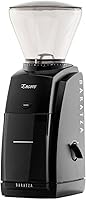
The Baratza Encore is the other benchmark. It uses 40mm commercial-grade conical burrs and 40 grind settings.
The front-mounted pulse button and simple on/off switch make daily grinding easy.
Mid-range grinders are the sweet spot for drip, pour-over and French press. They also handle espresso well enough for many home setups.
The extra settings help you dial in a brew method without guessing.
How much do premium grinders cost?
Premium grinders are the most expensive tier, and the jump buys precision, durability and features. Think stepless adjustment, larger burrs, metal housings and finer control over every dose.
This tier targets espresso brewers and anyone who wants repeatable results. Stepless grinders let you nudge the setting without fixed clicks.
Larger burrs grind faster and can hold a more consistent particle size.
The price climb is steep, so match it to your brewing. A premium grinder for a basic drip machine is money spent on features you won't use.
An espresso setup, though, benefits from the finer control.
Before you stretch the budget, read is a burr grinder worth it to see where the returns taper off. For most home brewers, a solid mid-range burr model is the sensible ceiling.
Is a cheap coffee grinder a false economy?
Often yes, if the cheap option is a blade grinder and you brew every day. The low cost hides the fact that you can't repeat a grind, so dialing in a recipe becomes guesswork.
Uneven grounds extract at different rates. Fine dust over-extracts and tastes bitter, while coarse chunks under-extract and taste sour.
A burr grinder reduces that spread, which is why it's the first upgrade most coffee guides recommend.
A budget burr grinder is the compromise. It costs more than a blade model but less than mid-range machines.
If the budget is tight, this is the tier to aim for rather than staying on a blade grinder.
The catch is build quality. Cheaper burr grinders may have fewer settings or simpler parts.
Check the burr material and the number of settings before you buy.
What do you get for the extra money at each step?
Each price step adds a specific improvement, not just a fancier shell. Knowing what changes helps you stop at the right tier for your brewing.
Here's the rough progression:
- Blade to entry burr: uniform grounds and repeatable settings. The biggest jump in cup quality.
- Entry burr to mid-range: more settings, better burrs, sturdier build. Useful for switching between brew methods.
- Mid-range to premium: finer adjustment, larger burrs, longer service life. Matters most for espresso.
The Cuisinart Supreme Grind sits at the affordable end of the burr market. Its 18 grind levels cover ultra-fine for espresso to extra-coarse for French press.
Its 8 oz hopper and one-touch power bar with auto shutoff keep it simple for daily use.
If your grinder starts acting up, coffee grinder not working covers the checks to run before you replace it. A jam or a loose part is often cheaper to fix than a new machine.
How do you decide what to spend?
Set your budget by your brewing method first, then pick the grinder type. Espresso and pour-over reward precision; drip and French press are more forgiving.
Start with the brew method you use most. For espresso, prioritize fine adjustment and burr quality.
For drip or French press, a mid-range burr grinder is plenty. For occasional use, a budget burr model is fine.
Then check the features you'll actually touch. Number of settings, hopper size and ease of cleaning matter more than extra modes you'll never use.
The OXO's 12 oz hopper and the Baratza's 40 settings are examples of practical features worth paying for.
Finally, plan for upkeep. Burrs wear over time, so pick a model with replaceable burrs.
The Cuisinart includes a cleaning brush to sweep grounds from its stainless steel burrs.
How much should you budget for a coffee grinder?
Budget for a burr grinder if you brew regularly, and treat the price as a long-term cost. How much a coffee grinder costs matters less than how well it matches your brewing.
For most homes, a mid-range burr grinder is the best value. It covers drip, pour-over and French press, and it handles light espresso duty.
A budget burr model suits tighter budgets, and a premium grinder makes sense for dedicated espresso setups.
Once you've bought one, learn to how to use a burr coffee grinder so the settings match each brew. A well-used mid-range grinder beats a premium one set at the wrong grind.
If you're still weighing the upgrade, read is a burr grinder worth it for the full comparison. And if your current grinder stops mid-grind, coffee grinder not working walks through the fixes first.
Frequently asked questions
Is a cheap blade grinder worth buying?
Only if you grind for a single simple brew method and don't mind uneven particles. Blade grinders chop beans with a spinning blade, so the grind is inconsistent and hard to repeat.
A budget burr grinder costs more but gives you uniform grounds and numbered settings.
Why do burr grinders cost more than blade grinders?
Burr grinders use machined steel or ceramic burrs that crush beans to a set size, and that precision costs more to build. The burrs are also built to handle daily grinding.
Blade grinders are cheaper to make but produce uneven grounds.
How often should you replace coffee grinder burrs?
It depends on how much coffee you grind and the burr material. Burrs wear as you use them, and many home grinders have replaceable burr sets.
Check your grinder's manual for the maker's guidance, and expect dull burrs to grind slower and less evenly.
Does a more expensive grinder make better coffee?
It can, but only up to the point where your brewing method can use the improvement. Uniform grounds matter most for espresso and pour-over.
For a simple drip brewer, a well-built mid-range burr grinder often delivers most of the benefit.
Are hand grinders cheaper than electric ones?
Usually yes. A manual burr grinder uses the same burr logic as an electric model without a motor or electronics, so the price is often lower.
The trade-off is that you crank it by hand for each dose.